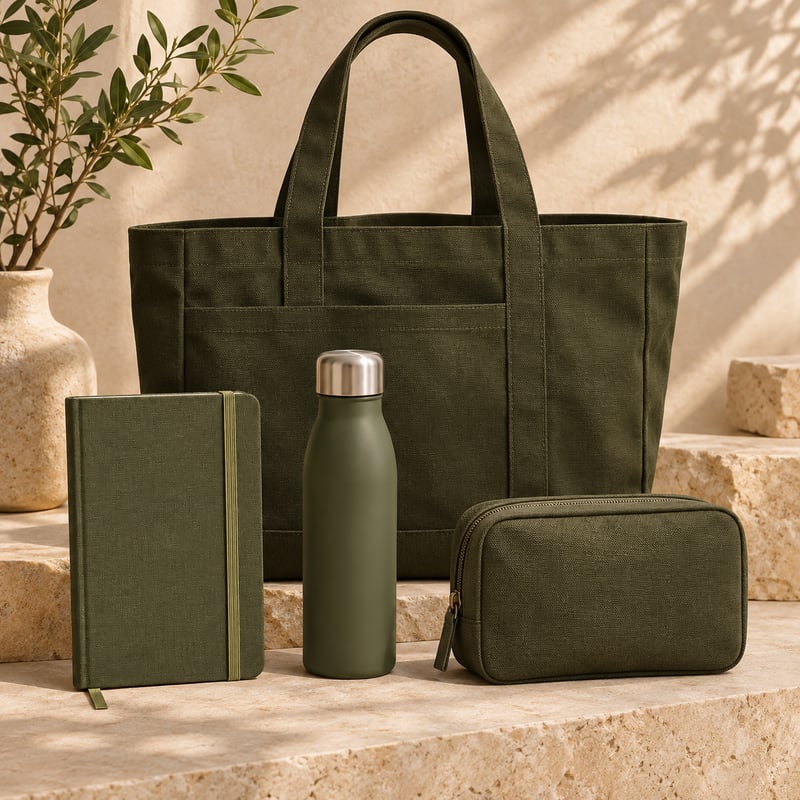
Key insight
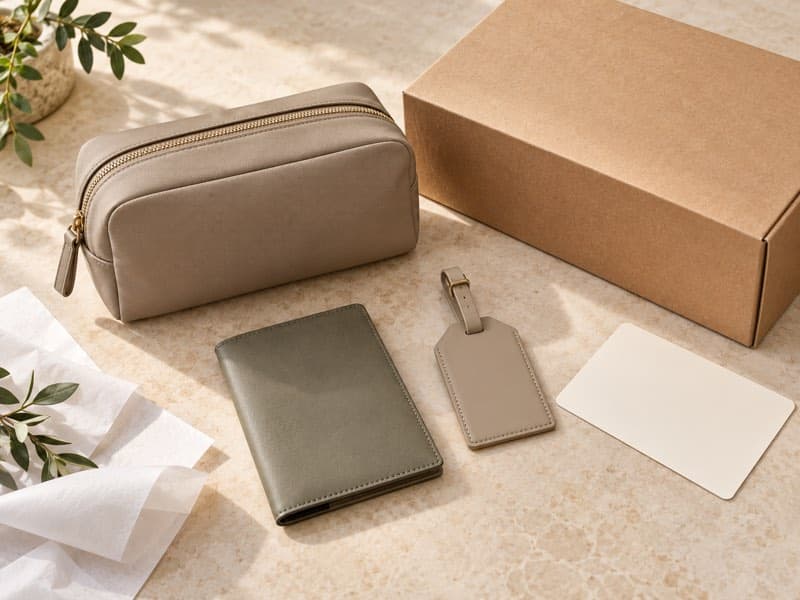
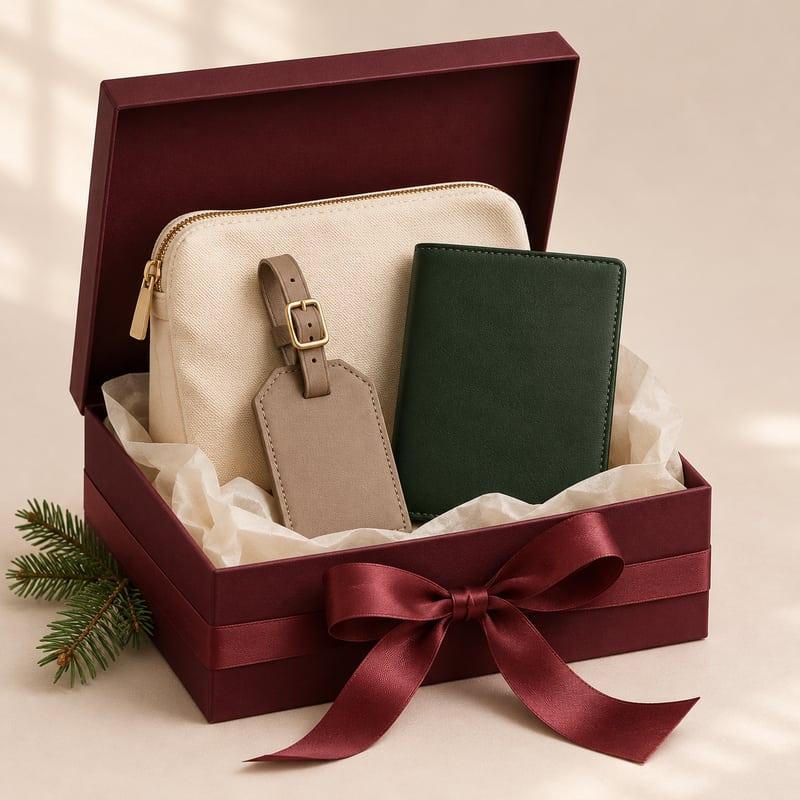
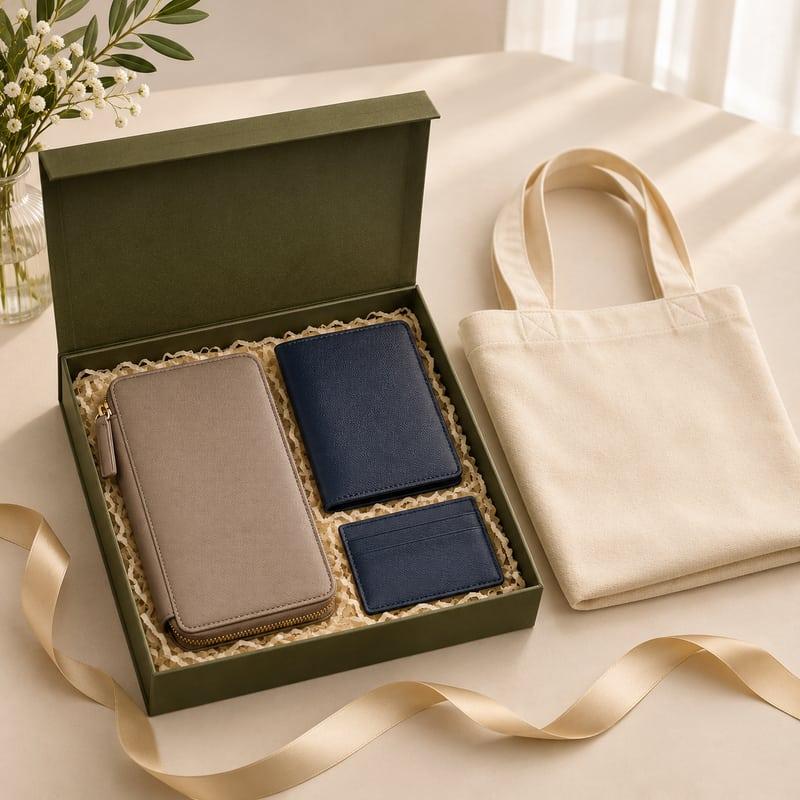
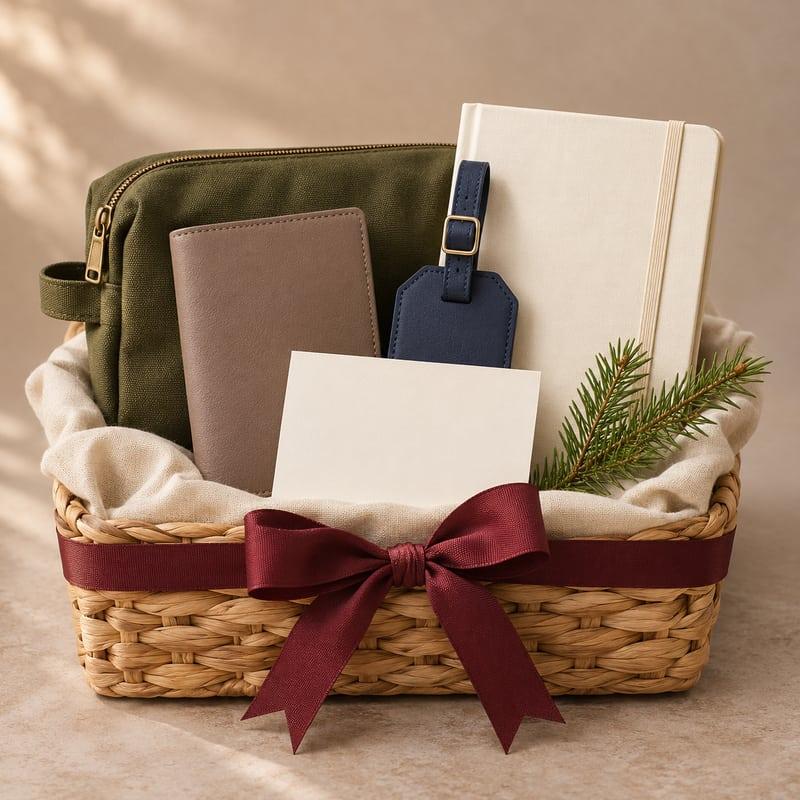
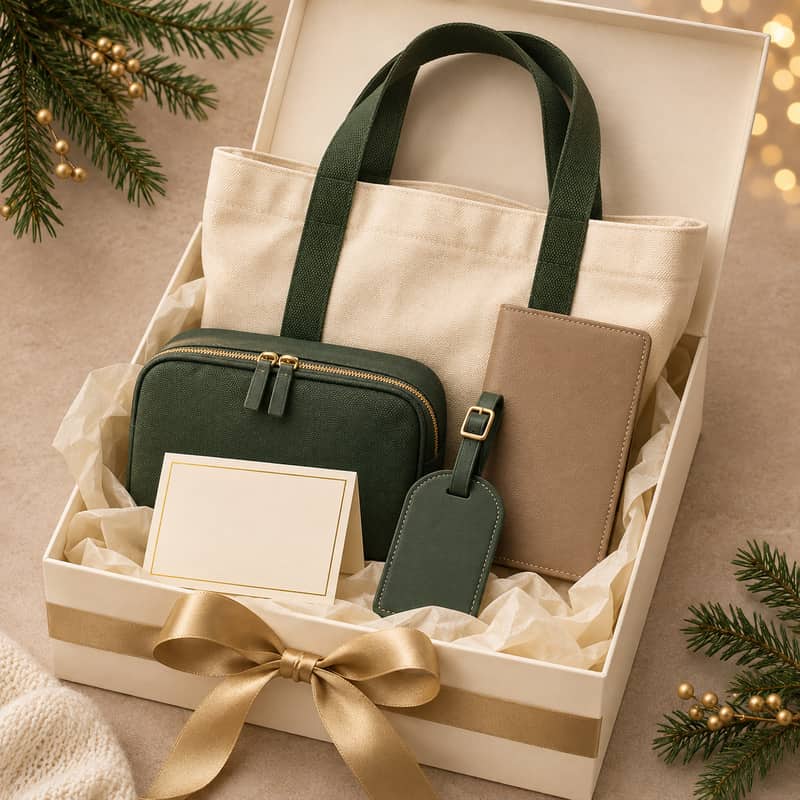
Size the reusable bag around the items employees will use in their first week. Test the fully packed sample with the actual notebook, bottle and accessories. Put the welcome note on top, secure heavy items, and use an outer carton for remote deliveries.
Reusable shopping bags for employee welcome kits can look simple, but they often decide whether the whole onboarding gift feels thoughtful or generic. HR teams may choose great items, then discover they do not fit, sit poorly, or arrive wrinkled. The better approach is to treat the bag as the structure of the welcome experience.
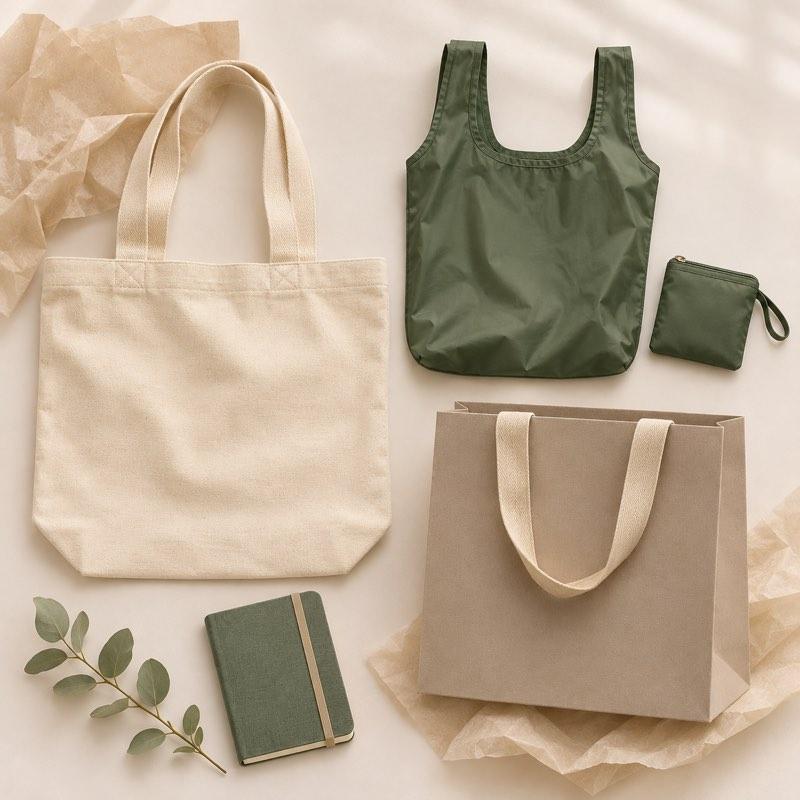
Reusable shopping bags for employee welcome kits should be selected before the gift list is finalized. The bag’s size, handle strength, material, shape, and branding determine what fits neatly, how the kit presents when opened, and whether employees will reuse it after onboarding. A practical bag turns separate items into one organized first impression.
A welcome kit is not only a collection of gifts. It is a message about the company’s culture, level of care, and attention to detail. Giftvera has seen that when teams plan the bag first, the final kit usually feels more intentional, easier to pack, and more useful for the new hire.
Why should reusable shopping bags for employee welcome kits come before the gift list?
A common problem is that HR teams start with a long list of items and choose the bag at the end. That creates pressure. The items may not fit, the bag may bulge, and the finished kit may feel improvised. Starting with the bag prevents that mismatch.
Reusable shopping bags for employee welcome kits should come before the gift list because the bag controls the usable space, weight capacity, presentation, and packing order. Once the bag is chosen, HR teams can select items that fit the onboarding purpose, stay organized during delivery, and look polished when the employee opens the kit.
Explore Giftvera’s custom shopping bags for bag sizes, gussets and handle options.
The bag is part of the onboarding message
Giftvera often sees companies treat the bag as “just packaging.” In practice, the new employee sees the bag first. The person notices the color, the handle, the logo, the structure, and the way the items sit inside. That first moment can make the kit feel premium, practical, rushed, or wasteful.
A reusable shopping bag works well for onboarding because it has two jobs:
- It holds the welcome kit items neatly.
- It becomes a useful item after the first day.
That second point matters. If the bag is too promotional, too flimsy, or too awkward to carry, the employee may not use it again. If the bag feels practical and looks tasteful, it may become a lunch bag, desk-side organizer, grocery bag, event tote, or car bag.
Start with these bag decisions
Before adding notebooks, bottles, folders, or snacks, HR teams should decide a few practical details.
| Decision | Why it matters | Common risk if ignored |
|---|---|---|
| Bag dimensions | Controls what fits and how items stand | Items stick out or look crowded |
| Gusset width | Helps the bag stand and hold boxy items | Kit collapses or leans |
| Handle length | Affects comfort and reuse | Bag is awkward to carry |
| Material feel | Shapes perceived quality | Kit feels cheap even with good contents |
| Logo size | Affects employee willingness to reuse | Employees avoid using loud branding |
| Color | Influences daily usability | Very light colors may show dirt quickly |
A practical planning sequence
Giftvera usually recommends a simple order of decisions:
- Define the onboarding scenario.
Is the kit for office arrival, remote employee delivery, event onboarding, or a hybrid team?
- Estimate the item categories.
Do not list every SKU yet. Start with categories such as drinkware, documents, stationery, apparel, and snacks.
- Choose the bag size and structure.
Decide the approximate dimensions, gusset, handle type, and material.
- Finalize the items.
Select products that match the bag’s shape and the employee’s first-week use.
- Test the pack-out.
Place sample items inside before mass production or bulk assembly.
Giftvera once communicated on a welcome kit project where the client had already selected a bottle, a notebook, a hoodie, and several paper inserts. The chosen bag looked good in photos, but its base was too narrow. The bottle pushed the notebook sideways, and the paper inserts bent. The fix was not complicated, but it would have been easier if the bag had been chosen before the item list.
A good welcome kit does not need many items. It needs a clear purpose, a practical bag, and a tidy opening experience.
What size and structure work best for reusable shopping bags for employee welcome kits?
The wrong size creates immediate problems. A small bag feels overstuffed. A large bag with too few items feels empty. A weak structure makes the contents slump. HR teams need a size that supports the kit, not just a bag that looks nice in a catalog.
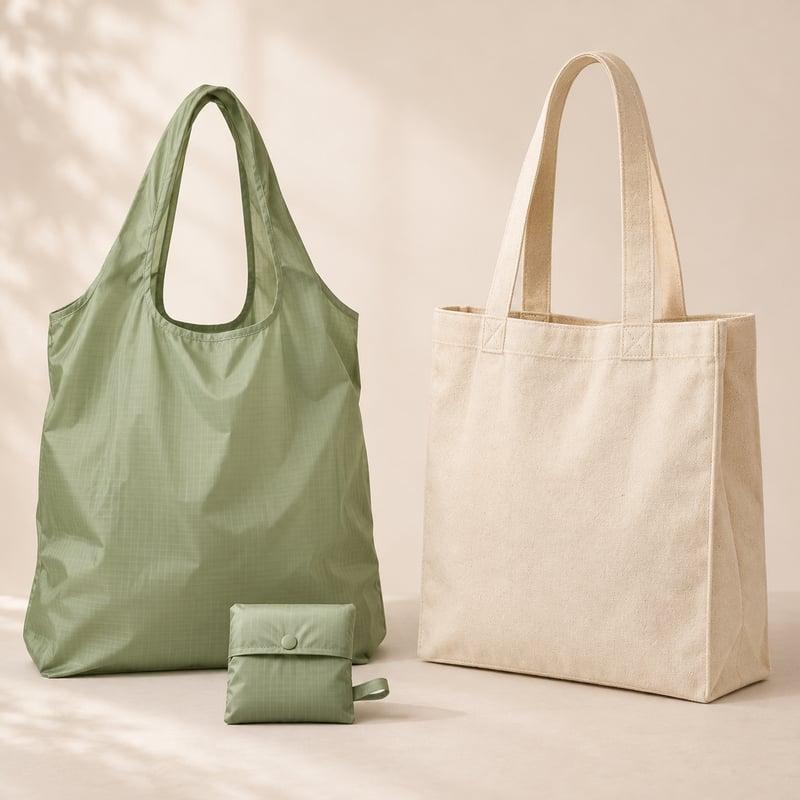
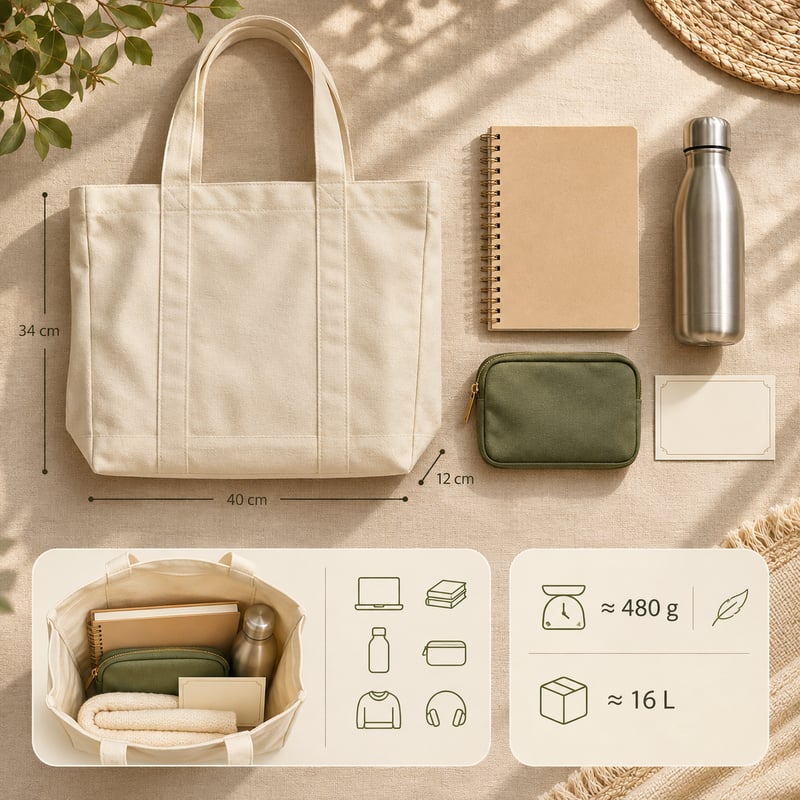
The best reusable shopping bags for employee welcome kits are medium-sized, gusseted, and structured enough to stand while being packed. For many office welcome kits, a bag around 12–16 inches wide with a 4–6 inch gusset works well, but the final size should be confirmed by sample packing the actual items.
Think in volume, not only width and height
Many buyers compare bags by front dimensions only. That can be misleading. A bag that is 14 inches wide and 16 inches tall may still be hard to pack if it has no gusset. A gusset creates usable depth, especially for items such as:
- Water bottles
- Coffee tumblers
- Tech pouches
- Lunch boxes
- Folded T-shirts
- Small snack boxes
- Welcome folders
- Desk organizers
For employee welcome kits, the base matters because the kit is often presented standing upright. A flat, stable bottom makes assembly easier and improves the employee’s first view.
Common size ranges
The right size depends on the item list. Still, HR teams can use the table below as a starting point.
| Welcome kit type | Suggested bag style | Typical contents | Notes |
|---|---|---|---|
| Light office kit | Small to medium gusseted bag | Notebook, pen, badge holder, document folder | Works for desk-based onboarding |
| Standard employee kit | Medium reusable shopping bag | Bottle, notebook, documents, small pouch, snack | Good balance for most teams |
| Apparel kit | Larger tote-style bag | Hoodie or T-shirt, bottle, welcome card | Needs more soft-item volume |
| Remote onboarding kit | Structured bag inside shipping carton | Compact items, protected drinkware, inserts | Must survive courier handling |
| Event onboarding kit | Easy-carry shopping bag | Agenda, badge, brochure, giveaway item | Handle comfort matters more |
Worked example: trial-pack a standard welcome kit
Use one physical sample and the actual kit items. For this example, pack an A5 notebook (148 × 210 mm), a capped bottle (70 mm in diameter and 230 mm tall), a filled organizer pouch, and a welcome card in its envelope.
- Measure the opening and usable interior. With the bag open, check the narrowest clear width between the seams or zipper ends. Slide in the notebook and pouch without forcing them. Measure the usable base depth with the gusset opened and check that the bottle and filled pouch sit flat in their planned positions. If the bag closes, check the clear height below the closure with the bottle upright.
- Pack in the order employees will see. Stand the notebook against a flat side, secure the bottle upright beside it, and place the pouch low enough to balance the load. Lay the welcome card on top with its front facing up.
- Lift, carry and reopen. Check that the handles sit comfortably, the attachment seams show no pulling, and the base keeps its shape. Set the bag down and unpack it. The notebook and card should come out flat, and the bottle should stay in place without pressing into the paper.
For an office handout, check that the welcome card is visible as soon as the bag opens and that each item is easy to remove. For a remote kit, secure the bottle in the outer carton and reopen a test shipment to check that it stayed in place, the documents stayed flat, and the welcome card is still on top. Record the approved internal dimensions and packing order for the assembly team.
Material and structure tradeoffs
Giftvera avoids saying one material is always best, because the right choice depends on budget, quantity, branding method, and intended use. However, HR teams can compare common options by practical features.
| Material option | Useful strengths | Watch-outs |
|---|---|---|
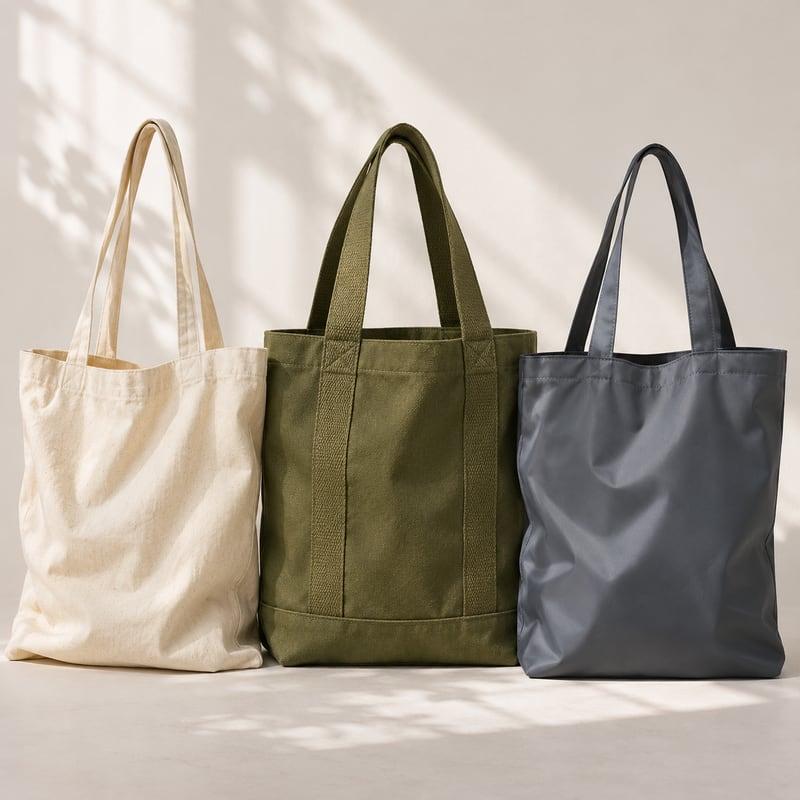
| Non-woven fabric | Lightweight, budget-friendly, easy for events | Can feel basic if too thin |
| Cotton canvas | Familiar, casual, good perceived value | May wrinkle and can cost more |
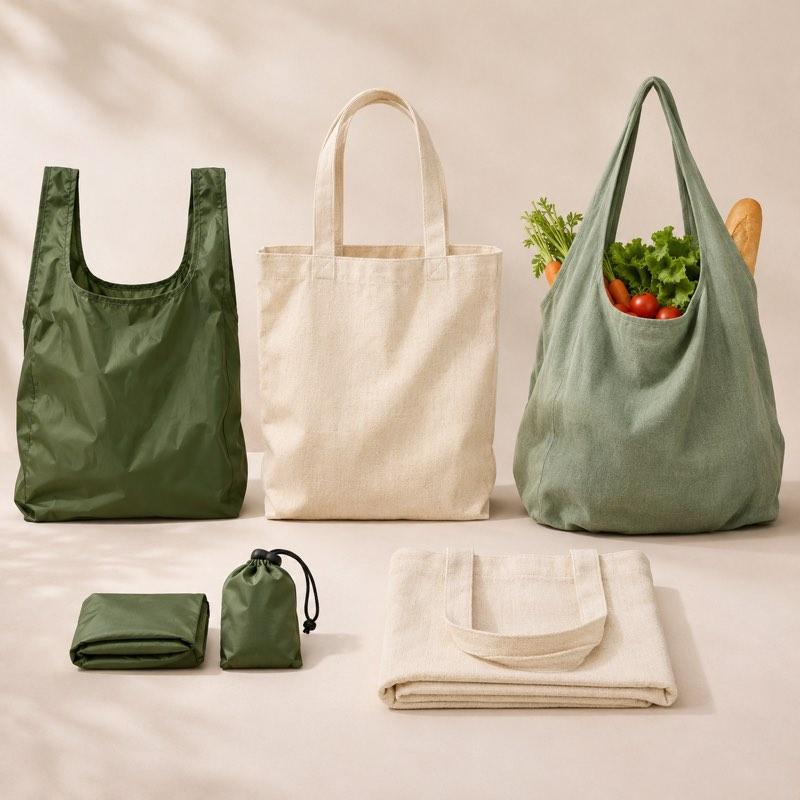
| Polyester or nylon | Smooth, lightweight, often foldable | May need structure support |
| Laminated woven material | Holds shape, easy to wipe | Can look more retail-like than corporate |
| RPET fabric | Popular for sustainability messaging | Claims and certificates should be verified with supplier documents |
If sustainability claims are important, HR teams should ask suppliers for documentation instead of relying only on product descriptions. For example, if a supplier describes a material as recycled, buyers should request relevant material declarations or certifications and check whether those documents apply to the actual order.
Handle strength and comfort matter
A welcome kit can become heavier than expected. A bottle, notebook, and small tech pouch can quickly add weight. The bag should have handles that match the load.
HR teams should check:
- Handle stitching or attachment method
- Comfort when carried for several minutes
- Whether the handle length allows shoulder carry
- Whether the bag tilts when packed
- Whether the logo placement distorts when full
Giftvera recommends sample packing and then lifting the bag several times. This simple step often reveals issues that product photos cannot show. If the handles feel too thin or the bag sags badly, employees will notice.
What should you include inside reusable shopping bags for employee welcome kits?
A welcome kit can become cluttered when every department wants to add something. HR wants onboarding documents. Marketing wants branded merchandise. IT may need device instructions. The employee only needs useful items that make the first week smoother.
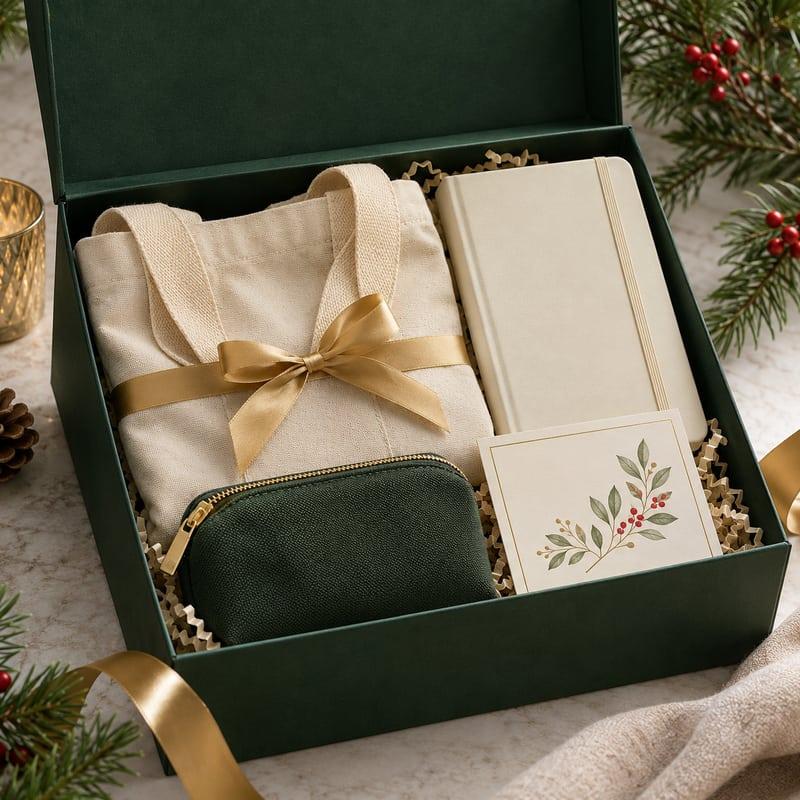
Reusable shopping bags for employee welcome kits should include practical first-week items such as onboarding documents, a notebook, pen, drinkware, badge holder, small organizer, and one thoughtful brand item. The best contents support the employee’s first few days instead of filling the bag with random promotional products.
Choose items by first-week usefulness
Giftvera suggests using the employee’s first week as the filter. If an item will not help the employee settle in, understand the company, or feel welcomed, it may not belong in the bag.
Useful categories often include:
- Onboarding materials: welcome letter, schedule, team map, values card
- Desk basics: notebook, pen, sticky notes, desk card
- Drinkware: bottle, tumbler, or mug
- Access items: badge holder, lanyard, key card sleeve
- Small organizers: zipper pouch, cable pouch, card holder
- Comfort items: snack, tea, coffee sachet, small wellness item
- Brand culture item: tasteful apparel, pin, patch, or simple company gift
The key word is “useful.” A new employee may appreciate fewer items if each one has a clear purpose.
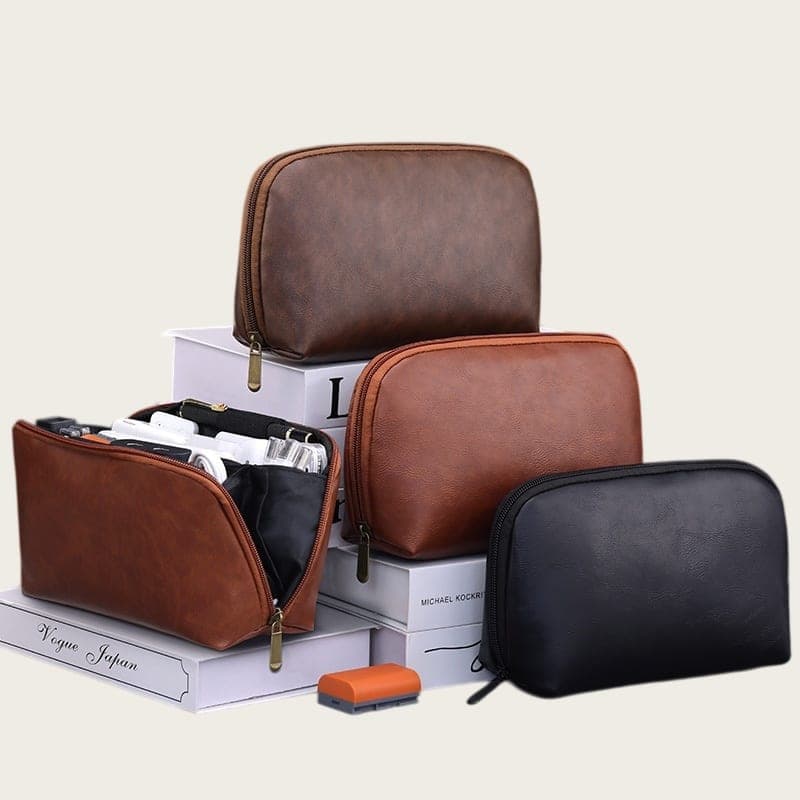
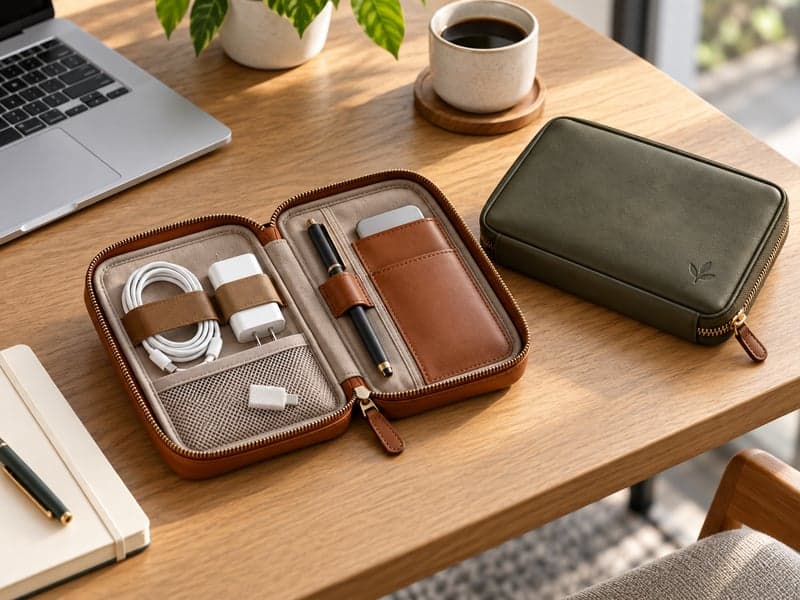
A custom organizer pouch can keep small accessories together when the kit includes cables or adapters.
A sample welcome kit build
Here is a balanced example for a medium reusable shopping bag:
| Item | Purpose | Packing note |
|---|---|---|
| Welcome card | Creates a personal first impression | Place near the top or front |
| Printed onboarding guide | Helps first-day navigation | Keep flat in a folder |
| Notebook and pen | Supports meetings and notes | Pack upright against the back |
| Water bottle | Useful daily item | Place at base or side |
| Badge holder or card sleeve | Supports office access | Put in a small pouch |
| Zipper pouch | Organizes small items | Use it to hold pen, badge, cable |
| Snack or tea | Adds warmth | Avoid items that crush easily |
This type of kit feels complete without being excessive. It also gives the bag enough structure to stand.
Avoid filler that weakens the experience
Poorly chosen filler can make a welcome package feel cheap. Giftvera has seen projects where too many small items made the kit look messy. Stickers, flyers, coupons, loose candies, and multiple tiny accessories can work in some brand contexts, but they need control.
Before adding an item, HR teams can ask four questions:
- Will a new employee use this in the first week?
- Does this item fit the bag neatly?
- Does this item support the company’s tone?
- Will this item still feel relevant after onboarding?
If the answer is no, the item may be better removed.
Match contents to employee type
Different teams may need different kits. A remote software developer, hotel staff member, sales representative, and corporate office hire may not need the same contents.
| Employee group | Useful kit focus | Bag considerations |
|---|---|---|
| Office employees | Desk basics, documents, drinkware | Structured bag with document support |
| Remote employees | Compact, shippable, personal items | Bag should fit inside a shipping carton |
| Sales teams | Travel-friendly items, card holder, pouch | Handles and portability matter |
| Retail or hospitality staff | Uniform-related items, badge holder, handbook | Bag should be easy to carry home |
| Interns or trainees | Schedule, notebook, learning materials | Keep contents simple and clear |
Giftvera often advises teams to create a core kit and then add role-specific inserts. This keeps the program manageable while still making the kit relevant.
How should you brand reusable shopping bags for employee welcome kits?
Branding can improve the welcome kit, but it can also reduce reuse. A very large logo may look exciting in a launch meeting, yet employees may avoid carrying it outside work. HR teams need branding that feels proud, not forced.
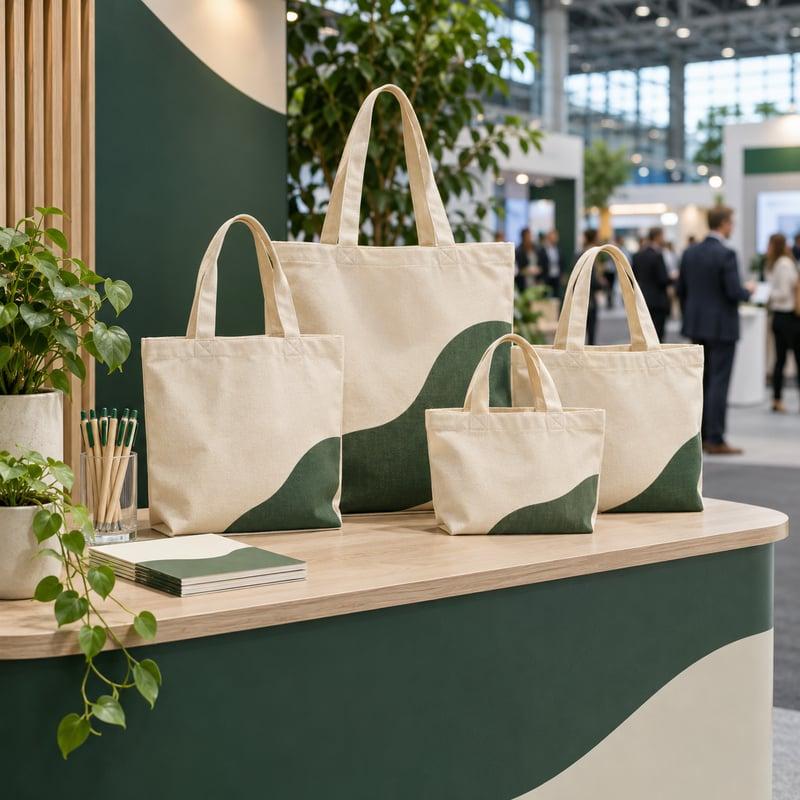
Reusable shopping bags for employee welcome kits should use tasteful branding that supports daily reuse. A smaller logo, practical color, and clean placement often work better than oversized graphics. The goal is to make the bag feel like a useful company item, not a disposable advertisement.
Employees reuse what fits their life
The strongest branded gift is not always the loudest one. It is the one employees keep using. A reusable shopping bag may be carried to lunch, the supermarket, a team event, or a commute. That means the design must pass a simple test: Would someone willingly carry this in public?
Giftvera recommends balancing brand visibility with personal usability.
Good branding choices include:
- A small logo on the lower corner
- A tonal logo on the same color family
- A woven label instead of a large print
- A simple brand mark without a long slogan
- A color that matches daily outfits or office use
- A design that works even when the bag is not full
Riskier choices include:
- Oversized front logos
- Very bright colors that clash with daily use
- Long marketing messages
- Dense artwork that cracks or distorts
- White or very pale colors for heavy daily use
- Branding placed where folds or seams interrupt the print
Logo method depends on material and quantity
Different bag materials support different decoration methods. Buyers should confirm decoration options with the supplier before approving the design.
| Branding method | Best for | Considerations |
|---|---|---|
| Screen printing | Simple logos, larger quantities | Works well for flat panels |
| Heat transfer | Colorful artwork, gradients | Must be tested for hand feel and durability |
| Embroidery | Premium textile feel | Better for thicker fabrics; may not suit thin bags |
| Woven label | Subtle branding | Good for understated corporate style |
| Debossed or patched logo | Premium look on certain materials | Depends on material and construction |
Giftvera usually suggests asking for a pre-production sample or at least a decorated sample before full production. Colors can look different on fabric than they do on a screen. Logo size can also feel larger when the bag is filled and carried.
Review material, artwork and packaging options in the Giftvera customization guide.
Brand color should not overpower function
Company colors matter, but they should not be the only decision. A bright orange, red, or neon green bag may fit the brand book, but it may not become an everyday carry item. A neutral bag with a brand-color accent can be more reusable.
Practical color strategies include:
- Neutral base plus brand logo
This works well for professional office environments.
- Brand color as lining or handle detail
This gives personality without overwhelming the bag.
- Tone-on-tone logo
This creates a subtle, modern effect.
- Seasonal or campaign color
This works for limited onboarding cohorts or event-based hiring.
The best choice depends on the company culture. A creative agency may welcome bold graphics. A financial services firm may prefer restrained branding. A beauty or lifestyle brand may care more about color harmony and presentation. The bag should match the organization’s identity and the employee’s real life.
How do you pack the employee welcome kit so it feels organized?
Even good products can look disappointing when packed poorly. Heavy items crush paper. Small items disappear at the bottom. Loose cards bend. A reusable bag needs a packing plan so the employee opens a kit that feels calm and deliberate.
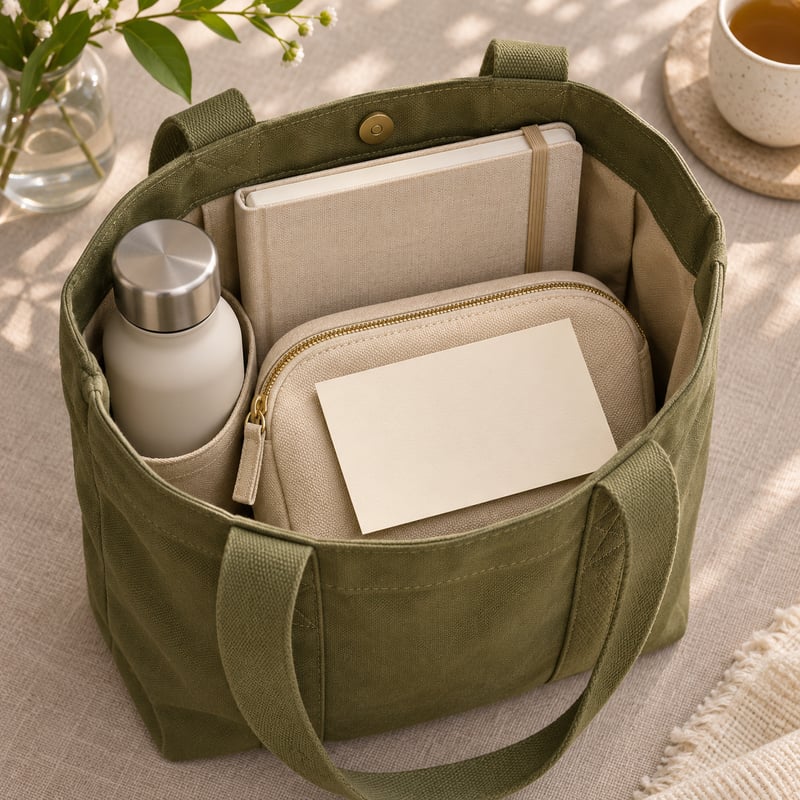
An employee welcome kit should be packed with heavy or rigid items at the base, flat documents protected at the back or front, small items grouped in pouches, and the welcome card visible on top. The final bag should stand upright, protect contents, and look organized when opened.
Use packing order as part of the design
Packing is not only a warehouse task. It is part of the employee experience. Giftvera has noticed that when teams test the opening moment, they make better decisions about item size, document format, and packaging.
A simple packing order can work well:
- Create the base.
Place heavier items such as bottles, mugs, or boxed products first.
- Support the back wall.
Add notebook, folder, or onboarding guide against one side.
- Group small items.
Put pens, badge holders, cables, or cards in a zipper pouch.
- Protect delicate items.
Keep snacks, paper goods, or fragile items away from pressure points.
- Place the welcome card last.
Make the personal message visible when the bag is opened.
- Check the front view.
The kit should look balanced, not random.
Packing mistakes that make kits feel cheap
Small mistakes can change the perceived quality of the whole kit. HR teams should watch for these issues:
- The bag cannot stand after packing.
- The bottle rolls around inside.
- The notebook corners bend.
- The welcome letter is hidden.
- Loose items fall to the bottom.
- The logo is blocked or distorted.
- The handles twist or collapse.
- The kit feels much heavier than expected.
- The bag is too empty and looks unfinished.
- The shipping carton damages the presentation.
For remote employees, shipping adds another layer. The reusable bag may need to be packed inside a carton with protective paper or dividers. If the kit will travel by courier, teams should not assume the bag will arrive exactly as packed unless the carton and internal support are planned.
Create a packing checklist
A simple checklist helps maintain consistency across multiple kits, especially when onboarding many employees at once.
| Checkpoint | What to confirm |
|---|---|
| Bag condition | Clean, correct color, no obvious defects |
| Logo position | Print or label is correct and visible |
| Item count | All approved items are included |
| Document condition | Papers are flat, clean, and current |
| Heavy item placement | Base is stable and not crushing other items |
| Small item grouping | Accessories are not loose at the bottom |
| Welcome card | Visible and correctly addressed if personalized |
| Final appearance | Bag looks neat when opened |
| Shipping protection | Carton and filler protect presentation |
Giftvera recommends doing a small pilot pack before bulk assembly. Even 5 to 10 test kits can reveal problems. For example, a folder may be too tall, a bottle may scratch a notebook, or the bag may need tissue paper to hold its shape. These findings are easier to fix before hundreds of kits are packed.
Think about the employee’s first five minutes
The employee may open the kit at a desk, at home, or during orientation. The first five minutes matter. A clear pack-out helps the employee understand what each item is for.
A good opening sequence might look like this:
- The employee sees a welcome card first.
- The onboarding guide is easy to find.
- The notebook and pen are ready for orientation.
- The bottle or tumbler feels like a useful daily item.
- The pouch keeps small accessories organized.
- The bag itself feels worth keeping.
That experience is more important than adding one more low-value item.
How can HR teams manage budget without making the kit feel generic?
Budget pressure is real. HR teams may want a polished welcome kit, but they also need to respect hiring volume, shipping cost, and internal approval limits. The risk is choosing the cheapest version of every item and ending up with a forgettable kit.
HR teams can manage budget by investing first in the reusable bag, one or two useful core items, and clean presentation. A smaller kit with practical contents often feels better than a crowded kit filled with low-value items. Consistency, fit, and neat packing protect perceived quality.
For kits that include additional products, browse Giftvera’s premium gifting options.
Use a tiered kit strategy
Not every welcome kit needs the same budget. Some companies create one standard employee kit and one upgraded version for special programs, leadership onboarding, or client-facing roles. This can help control cost without making the base kit feel neglected.
| Kit tier | Suggested focus | Example contents |
|---|---|---|
| Essential | Useful first-week basics | Reusable bag, welcome card, notebook, pen, badge holder |
| Standard | Practical and memorable | Bag, notebook, bottle, pouch, documents, snack |
| Premium | Higher perceived value | Structured bag, drinkware, organizer, apparel, gift box insert |
The bag should remain appropriate at every tier. Even an essential kit can feel good if the bag fits well, the logo is tasteful, and the packing is neat.
Spend where employees notice
Employees notice certain things quickly:
- Whether the bag feels sturdy
- Whether the logo looks tasteful
- Whether the items are useful
- Whether the kit is clean and organized
- Whether the welcome message feels human
They may not notice very small upgrades that do not affect use. For example, a slightly more expensive insert card may matter less than a better bag structure. A second pen may matter less than a pouch that keeps small items together.
Giftvera often suggests protecting the “touch points” first. These include the bag handle, the opening view, the welcome card, and the main daily-use item. If those feel right, the kit usually feels more thoughtful.
Control cost with standardization
Custom projects can become expensive when every detail changes. HR teams can manage cost by standardizing certain elements:
- Use one bag size across departments.
- Keep the logo method consistent.
- Choose a neutral color that works year-round.
- Create one core item list.
- Add role-specific inserts only when needed.
- Use simple packaging instead of over-designed packaging.
This approach helps especially for companies with ongoing hiring. Repeat orders become easier when the bag, branding, and core contents are already approved.
Do not let budget remove the human message
A welcome kit does not need to be expensive to feel warm. A short welcome card, a clear first-week guide, and a practical bag can create a stronger impression than a high-cost kit with no personal touch.
HR teams can add humanity through:
- A note from the manager
- A team photo card
- A simple first-week checklist
- A QR code linking to an onboarding video
- A local snack or culture-related item
- A card explaining why each item was chosen
These details help the kit feel intentional. They also reduce the risk that the reusable shopping bag feels like a container for random merchandise.
Frequently Asked Questions
What is the best bag size for an employee welcome kit?
The best size depends on the contents, but many standard kits work well with a medium reusable shopping bag that has a 4–6 inch gusset. HR teams should sample pack the actual notebook, bottle, documents, and accessories before confirming final dimensions.
Should the company logo be large on the reusable shopping bag?
A large logo is not always better. Employees are more likely to reuse a bag with tasteful branding, practical colors, and clean placement. A smaller logo, woven label, or tone-on-tone design can feel more wearable and less promotional.
What should not be included in an employee welcome kit?
Avoid random filler, fragile items, messy snacks, outdated documents, and overly promotional products with little practical value. Each item should support the employee’s first week, fit neatly in the bag, and match the company’s tone.
How do remote employee welcome kits need to be packed?
Remote kits need stronger shipping planning. The reusable bag should fit inside a carton, and heavy items should be secured so they do not crush documents or scratch other products. A test shipment can help confirm whether the presentation survives delivery.
Are reusable shopping bags more sustainable for welcome kits?
They can support lower-waste gifting when employees actually reuse them, but sustainability depends on material, production, transport, and usage. HR teams should verify supplier documents for any recycled or certified material claims and focus on practical design that encourages repeat use. Textile Exchange’s RCS and GRS overview.
What should go on top of an employee welcome kit?
Place the welcome card and first-week checklist on top so the employee sees them immediately. Keep documents flat and secure heavier items underneath or beside them.
Can one bag design work across several departments?
Yes. Standardize the bag and core supplies, then use role-specific inserts or accessories. Pack each version in a sample to confirm fit and update the assembly checklist for each department.
What should HR approve before bulk packing?
Approve one complete kit using the actual items, printed materials and outer carton where required. Record the packing order, quantities, label position and any substitutions before assembly.
Conclusion
Reusable shopping bags for employee welcome kits should be treated as part of the onboarding experience, not as an afterthought. The right bag shapes the gift list, protects the presentation, supports tasteful branding, and encourages real reuse. HR teams can create a stronger first impression by choosing the bag first, selecting useful first-week items, and testing the pack-out before bulk assembly. For teams planning branded onboarding kits, Giftvera can help review bag style, size, logo placement, item pairing, sampling, and packing details before production.