Key insight
Compare online bag quotations against the same written specification. Confirm fabric composition and weight, usable dimensions, handle attachment, logo method and packing scope. Load a physical sample with the intended items and record approval details before agreeing to bulk production.
Reusable shopping bags online can look polished in photos, but bulk orders can disappoint if the fabric feels thin, the stitching is weak, or the logo does not match your brand standards. That risk grows when buyers compare only unit prices. The safer approach is to check the bag’s use case, material, structure, branding method, and supplier process before approving the order.
To buy high-quality reusable shopping bags online, start with your real use scenario, then confirm material type, fabric weight, size, handle strength, stitching, bottom structure, logo method, artwork requirements, MOQ, sample approval, lead time, and bulk quality control. A good supplier should help translate “high quality” into checkable specifications before production.
Giftvera has seen many buyers begin with a product photo and a target price. That is understandable, but it is not enough. A shopping bag is simple in shape, yet small specification choices can change how it feels, how it carries weight, and how your brand is perceived.
Start with Giftvera’s custom shopping bags to compare product formats.
How should you define high-quality reusable shopping bags online before comparing quotes?
Many buyers search for high-quality reusable shopping bags online and quickly find hundreds of similar-looking options. The problem is that “high quality” means different things for a trade show giveaway, a retail gift-with-purchase, an employee welcome kit, or a resale tote. If the purpose is unclear, the quote comparison becomes misleading.
High-quality reusable shopping bags online should be defined by use case first. Buyers should confirm what the bag will carry, who will receive it, how long it should be used, how visible the logo will be, and whether the bag must feel promotional, retail-ready, or premium. These details guide material, size, handles, stitching, and packaging.
Start with the real use scenario
Giftvera usually begins reusable bag discussions by asking a few practical questions:
- What will the bag carry?
- Will the recipient use it once, weekly, or for months?
- Will the bag be handed out flat, packed in a gift box, or shipped with products inside?
- Is the bag mainly a low-cost giveaway or a visible brand item?
- Does the buyer need a natural, sporty, retail, or premium look?
These answers matter more than the first product photo.
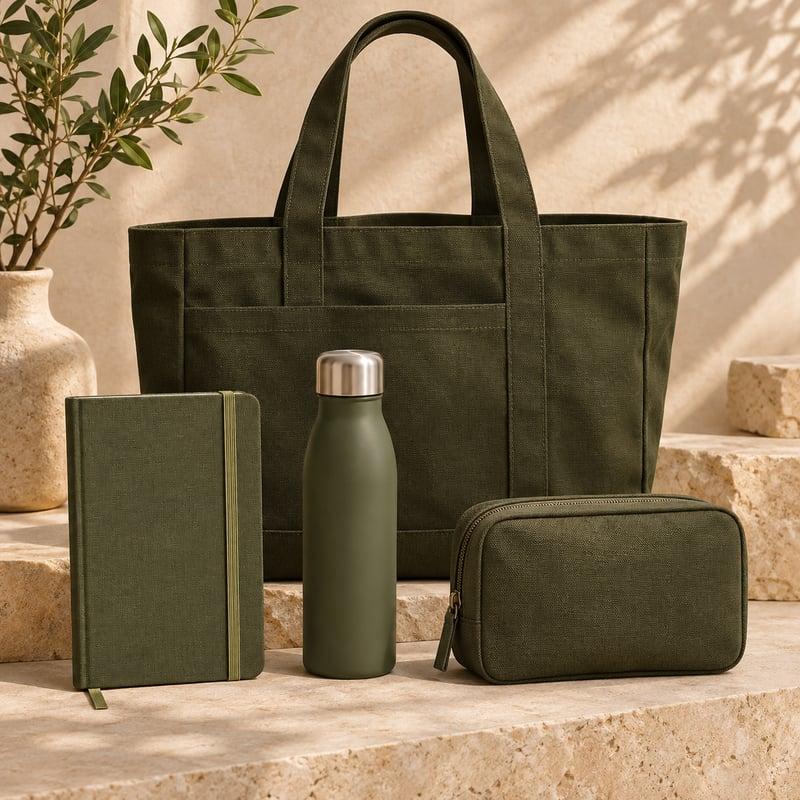
For example, an event agency may need 1,000 lightweight bags for brochures and samples at a conference. In that case, a simple non-woven or RPET shopping bag may be suitable if the stitching and handles are acceptable. A beauty brand preparing a gift-with-purchase campaign may need a better fabric handfeel, cleaner edge finishing, and a logo method that matches retail presentation. A corporate HR team building onboarding kits may need stronger handles because the bag could hold a notebook, bottle, laptop sleeve, and welcome items.
Match bag expectations to the buying purpose
| Use case | Common buyer priority | Details to check before order |
|---|---|---|
| Event giveaway | Cost control and delivery date | Fabric weight, print area, packing method, carton quantity |
| Retail gift-with-purchase | Brand look and perceived value | Fabric texture, logo color, stitching neatness, size consistency |
| Employee gift | Practical daily use | Handle comfort, load capacity, inner finishing, bottom structure |
| Resale program | Retail-grade consistency | Labeling, packaging, barcode needs, bulk inspection process |
| Trade show sample bag | Lightweight and visible branding | Logo size, handle length, foldability, production timeline |
Do not let photos make the decision
Online photos often hide details. A reusable shopping bag may look neat when empty and photographed from the front. However, buyers need to know what happens when the bag is used.
Giftvera has joined quotation and sampling communication where two bags looked almost identical in images, but the real samples felt very different. One used thinner material and narrow handles. The other had better fabric body, cleaner stitching, and more stable shape. The cheaper option was not “wrong,” but it fit a different use case.
Before comparing quotes, buyers should ask suppliers to confirm:
- Exact material name
- Fabric weight or thickness
- Finished bag size
- Handle length and width
- Stitching style
- Bottom gusset or no gusset
- Logo method and artwork format
- Packing method
- Sample lead time and bulk lead time
The goal is not to buy the most expensive bag. The goal is to avoid paying for a bag that cannot support the brand moment.
What materials and thickness details matter when buying reusable shopping bags online?
Material descriptions can sound simple, but they often hide important differences. A listing may say “cotton tote,” “canvas bag,” “non-woven bag,” or “RPET bag,” yet the actual feel and strength depend on fabric weight, weave, finishing, and construction. Buyers who skip this step may approve a price that cannot support their quality expectations.
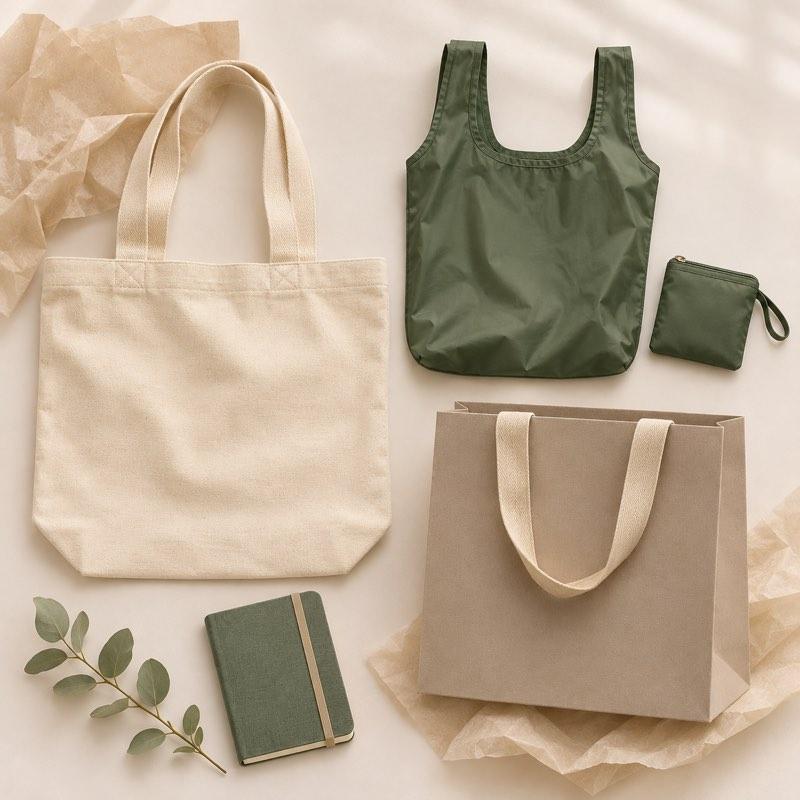
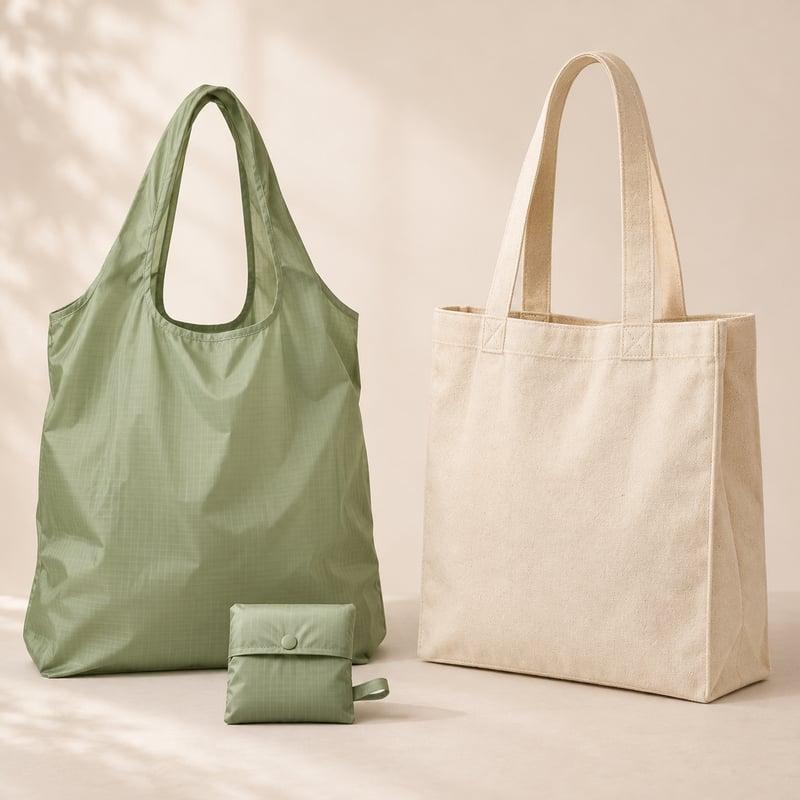
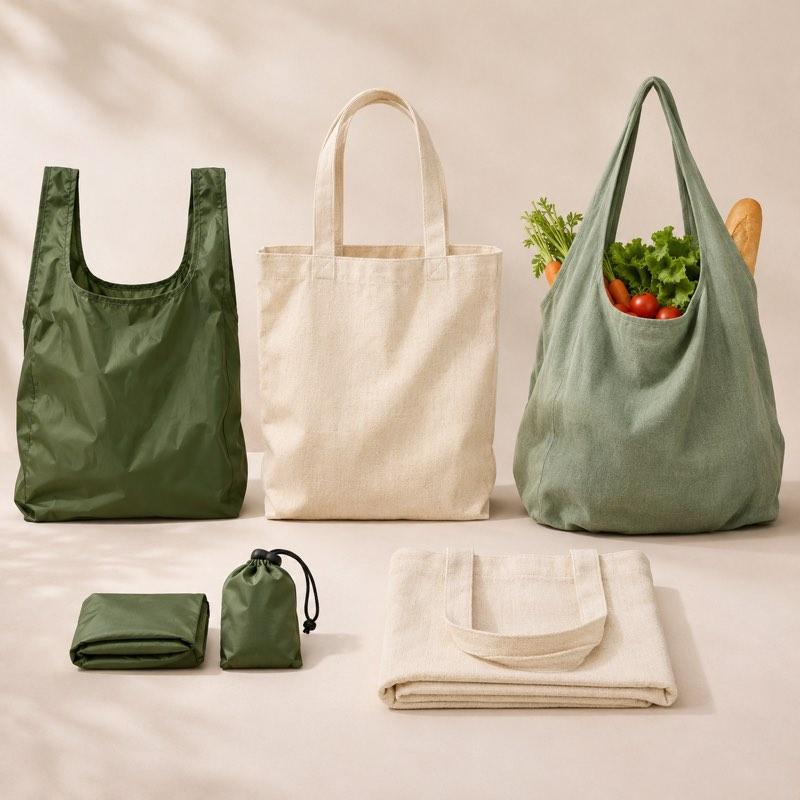
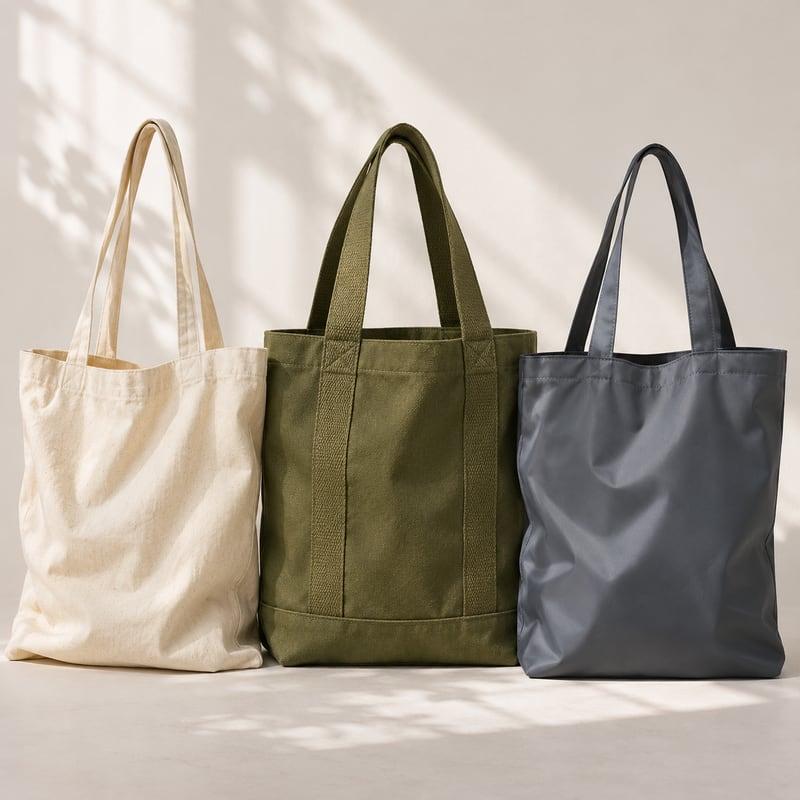
When buying reusable shopping bags online, buyers should confirm the material type, fabric weight, thickness, texture, color availability, and whether the supplier can provide a physical sample. Common options include non-woven PP, cotton, canvas, polyester, nylon, jute, and RPET. No material is best for every project; the right choice depends on purpose, budget, branding, and quantity.
Common material options buyers compare
Giftvera often sees buyers compare reusable shopping bag materials only by unit price. That can create problems because each fabric has a different handfeel, weight, and branding effect.
| Material | Common impression | Typical use | What to verify |
|---|---|---|---|
| Non-woven PP | Lightweight, economical | Events, supermarket promotions, bulk giveaways | GSM, handle reinforcement, stitching |
| Cotton | Natural, soft, casual | Lifestyle brands, corporate gifts, eco-style campaigns | Fabric weight, shrinkage notes, print compatibility |
| Canvas | Thicker, structured, durable feel | Retail gifts, employee gifts, premium promotions | Ounce weight, stiffness, sewing quality |
| RPET polyester | Smooth, modern, recycled-positioned | Brand campaigns, travel, retail promos | Supplier documentation, fabric denier/GSM, print method |
| Nylon/polyester | Practical, foldable, water-resistant feel | Travel bags, compact shopping bags | Denier, coating, edge finishing |
| Jute | Rustic, natural texture | Food, wine, lifestyle, organic-style brands | Odor, lamination, handle attachment |
Supplier-provided sustainability claims, recycled content documents, and certifications should be checked before relying on them in public marketing. Buyers should request documentation and decide whether their own compliance or legal team needs to review the claim.
Compare fibre composition and construction in the shopping bag materials guide.
Understand common weight references
Reusable shopping bags are often described by fabric weight. The unit depends on the material.
- Non-woven PP: often described in GSM, such as 80 gsm, 90 gsm, 100 gsm, or 120 gsm.
- Cotton or canvas: often described in ounces, such as 5 oz, 8 oz, 10 oz, or 12 oz.
- Polyester or nylon: may be described by denier, such as 210D, 300D, or 600D, or by GSM.
- Laminated materials: may include fabric weight plus lamination thickness.
These numbers are useful, but they are not the whole story. A higher number does not automatically mean the finished bag is better. Stitching, pattern, handle design, and bottom structure also affect performance.
For recycled-content evidence and chain-of-custody context, review the Textile Exchange RCS and GRS overview.
Ask for specification clarity, not vague promises
Buyers should avoid accepting descriptions like “good quality,” “thick material,” or “strong handle” without measurable details. A better supplier conversation sounds like this:
- “Please confirm the fabric weight.”
- “Please confirm the finished size after sewing.”
- “Please show the handle attachment style.”
- “Please confirm whether the bag has a bottom gusset.”
- “Please send close-up photos of stitching and edge finishing.”
- “Please confirm whether the bulk fabric color will match the approved sample.”
Giftvera prefers this kind of specification confirmation because it reduces misunderstanding before sampling. It also helps buyers compare quotes fairly.
Lower price usually means something changes
A lower unit price may be useful, especially for high-volume promotions. However, buyers should ask what has been adjusted. In many online reusable bag quotes, a lower price may involve:
- Lighter fabric
- Simpler stitching
- Narrower handles
- No bottom gusset
- Smaller logo area
- Fewer color options
- Basic packing
- Less strict sample matching
- Less flexible customization
None of these choices are automatically bad. They simply need to match the project. A one-day event bag can be economical. A retail gift bag for a beauty brand may need more visual polish. A corporate gift tote may need a better structure because employees may reuse it in public.
Which construction details reveal high-quality reusable shopping bags online?
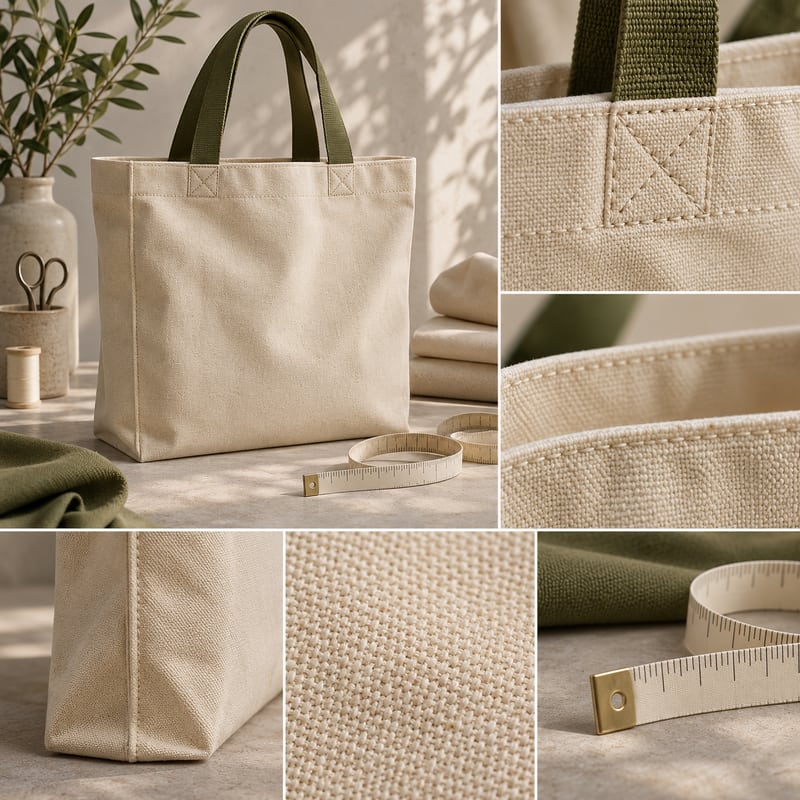
A reusable bag does not fail only because of fabric. It can also fail because the handles stretch, seams open, the bottom loses shape, or the edges look unfinished. These issues are hard to see in marketplace thumbnails, so buyers should request close-up photos, samples, and clear construction details before bulk approval.
High-quality reusable shopping bags online should have construction details that fit the expected load and brand presentation. Buyers should check handle width, handle length, reinforcement, seam type, stitching density, bottom gusset, edge finishing, and whether the bag holds its shape when filled. These details often separate cheap-looking bags from dependable branded bags.
Handles deserve special attention
Handles are one of the first places where cost reduction becomes visible. Thin handles can make a bag feel cheaper even if the body fabric is acceptable. Poorly attached handles can also cause the bag to fail under normal use.
Buyers should confirm:
- Handle length: short hand-carry handles or longer shoulder handles
- Handle width: narrow handles may feel uncomfortable with heavier contents
- Handle material: same fabric, webbing, cotton tape, PU, or another material
- Attachment method: simple stitching, cross stitching, box stitching, rivets, or reinforced panels
- User experience: whether the bag will be carried by hand, on the shoulder, or both
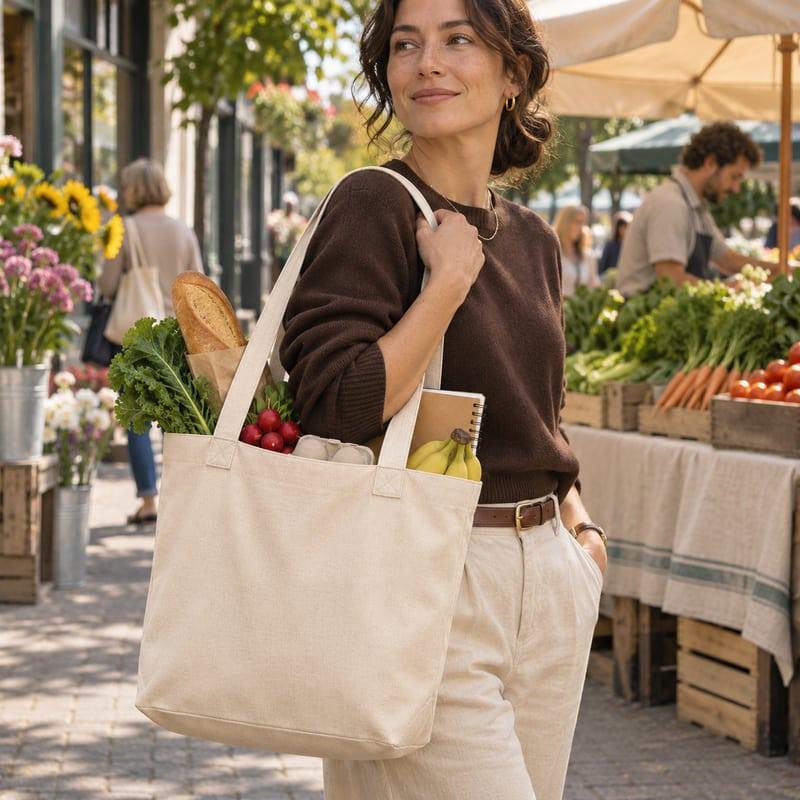
For many corporate and retail projects, shoulder-carry comfort matters. A tote bag that looks good but cannot sit comfortably on the shoulder may not be reused often. That reduces brand exposure.
Stitching and seams affect both strength and appearance
Buyers do not need to become sewing technicians, but they should know what to look for. On a physical sample, check whether the stitches are even, whether loose threads appear, and whether stress points are reinforced.
Useful checks include:
- Look at the handle joints. These areas carry the most stress.
- Check the side seams. The stitching should be straight and consistent.
- Inspect the bottom corners. Weak corners can distort after use.
- Review loose threads. A few may be trimmed, but many loose threads suggest poor finishing.
- Open the bag fully. The shape should match the approved size and structure.
Giftvera has seen sample discussions where the buyer first focused only on the front logo. After reviewing the handle stitching and bottom structure, the buyer adjusted the specification before bulk production. That small review helped avoid a weak branded giveaway.
Bottom structure changes the bag’s real usefulness
A flat bag and a gusseted bag may look similar in front-view photos. In use, they behave differently.
| Bottom style | Best for | Buyer notes |
|---|---|---|
| No gusset | Documents, brochures, lightweight flat items | Cheaper and simple, but less volume |
| Bottom gusset | Retail items, boxed products, welcome kits | Better capacity and shape |
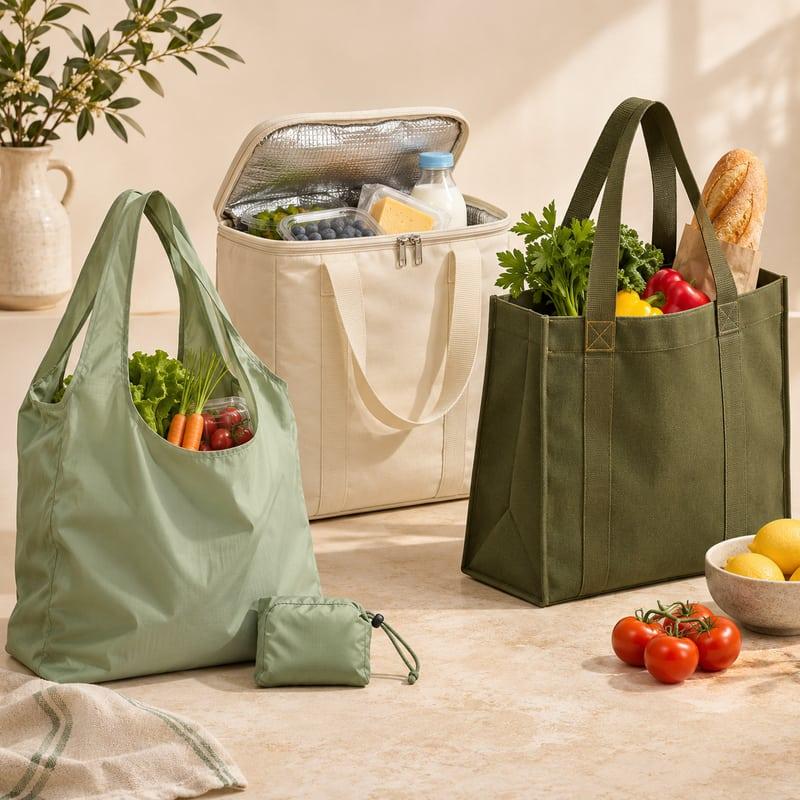
| Side and bottom gusset | Grocery-style use, bulkier items | More practical but may cost more |
| Reinforced bottom panel | Heavier products or premium use | Adds structure and perceived quality |
If the bag will hold boxed cosmetics, food jars, catalogs, or employee onboarding items, the bottom design matters. A bag that cannot stand or hold shape may look poor during handout photos and unboxing moments.
Size should be checked against actual contents
Many buyers approve a standard size without testing the items that will go inside. This can create a practical problem. The bag may be too small, too deep, too wide, or visually unbalanced.
Before final approval, buyers should list the expected contents:
- Product boxes
- Brochures or catalogs
- Water bottles
- Apparel items
- Gift boxes
- Notebooks
- Tech accessories
- Beauty kits
- Travel accessories
Then buyers should ask the supplier to recommend a finished size. A mock-up can help, but a physical sample is better for important projects. If the bag will carry multiple products, ask the supplier to confirm the size with allowance for easy insertion and removal.
What should you confirm for branding, samples, and delivery before you order?
Branding is where many online reusable bag orders become risky. A logo may look perfect in a digital mock-up but appear too small, too large, dull, cracked, misaligned, or inconsistent in bulk. Sampling and supplier communication help buyers control these risks before production starts.
Before ordering branded reusable shopping bags online, buyers should confirm the logo method, artwork format, print size, color expectations, sample approval process, MOQ, production lead time, packing method, inspection plan, and shipping schedule. Bulk production should begin only after the buyer approves a clear sample or pre-production proof.
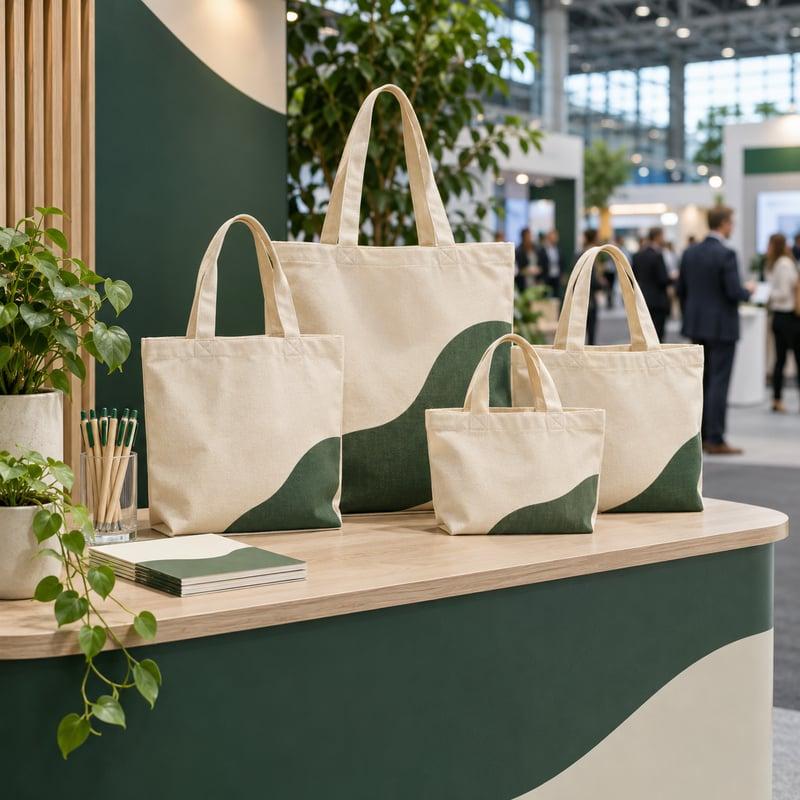
Choose the logo method based on fabric and brand effect
Different logo methods suit different materials. Buyers should not choose a logo method only by price. They should consider color accuracy, durability, texture, and the final look.
| Logo method | Common fit | Strengths | Points to confirm |
|---|---|---|---|
| Screen printing | Cotton, canvas, non-woven, some polyester | Cost-effective for simple logos | Color matching, print size, setup fee |
| Heat transfer | Polyester, nylon, some cotton blends | Good for detailed or colorful designs | Handfeel, edge visibility, durability expectations |
| Embroidery | Canvas, cotton, thicker fabrics | Premium texture | Logo complexity, thread colors, puckering risk |
| Woven label | Many fabric bags | Retail-like detail | Label size, placement, sewing method |
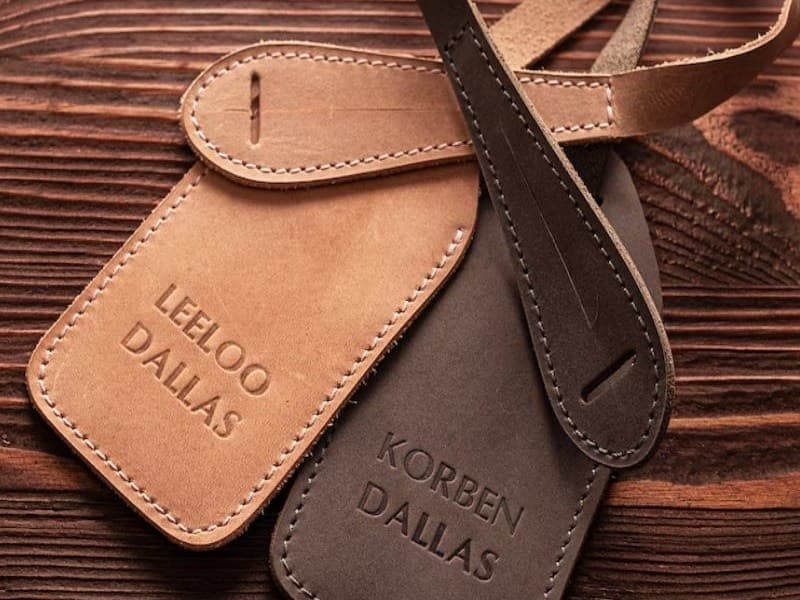
| PU patch or leather patch | Premium totes, gift bags | Elevated brand feel | Material choice, emboss/deboss effect, MOQ |
If brand color is important, buyers should provide Pantone references where possible. However, exact color matching may vary by fabric, ink, lighting, and production batch. Buyers should ask the supplier to confirm realistic tolerances before production.
Artwork files need to be production-ready
A low-resolution logo copied from a website is usually not enough. For clean printing, suppliers often need vector files.
Common artwork requirements include:
- AI, EPS, or PDF vector file
- Pantone color references
- Logo placement instructions
- Print size in centimeters or inches
- Mock-up reference
- Any brand guidelines
If the buyer does not have vector artwork, the supplier may need to redraw or adjust it. That can add time. It is better to solve artwork issues before the sample stage.
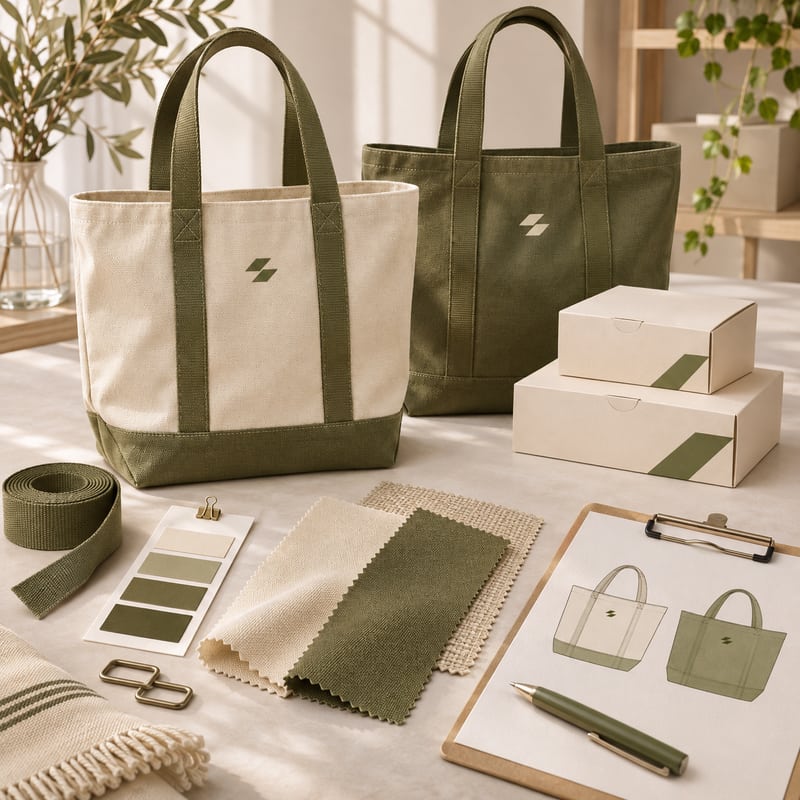
Review decoration choices through the Giftvera customization guide.
Sample approval protects the buyer
For bulk branded orders, sample approval is one of the most important steps. A sample allows the buyer to check:
- Material handfeel
- Actual size
- Logo color and placement
- Handle comfort
- Stitching and finishing
- Packaging method
- Overall brand impression
Giftvera often reminds buyers that a sample is not only about “liking the design.” It is a control point. If the sample is too thin, too small, or not aligned with the brand, the buyer can still adjust before bulk production.
Sample timelines vary by material and customization. As a practical reference, many simple reusable bag samples may take around 5–10 business days after artwork and specifications are confirmed. Bulk production may take around 20–35 days, depending on quantity, material availability, logo method, packaging, and factory schedule. Buyers should verify exact timing with the supplier before committing to an event date.
MOQ and price should be discussed together
MOQ, or minimum order quantity, depends on material, color, logo method, and customization level. For many PU, nylon, canvas, and fabric gift projects, Giftvera often discusses starting quantities around 100–300 pieces per style, depending on material, while more specialized materials, custom dyeing, or complex trims may require higher quantities. Buyers should confirm the exact MOQ for their design.
A quote should clarify:
- Unit price
- Sample cost
- Mold or setup fee, if any
- Logo cost
- Packaging cost
- Carton details
- Shipping cost or trade terms
- Payment terms
- Lead time
- Validity period of the quote
This prevents a common online buying issue: the first unit price looks attractive, but extra costs appear later.
Bulk consistency should be agreed before production
Bulk consistency is especially important for brand managers, retailers, agencies, and gift distributors. If bags are distributed across stores, events, or client locations, inconsistent logo color or fabric shade can create complaints.
Before production, buyers should ask:
- Will bulk material match the approved sample?
- What tolerance applies to size, color, and logo placement?
- Will the supplier send pre-production photos?
- Can the supplier check random finished pieces before packing?
- How will defective pieces be handled?
- Will the supplier provide carton photos or packing details?
These questions are not aggressive. They are normal procurement questions for branded goods. A reliable supplier should be able to answer them clearly.
How can buyers compare reusable shopping bags online without choosing only the cheapest quote?
Online sourcing makes price comparison easy, but it can also make quality comparison shallow. When several suppliers quote for “the same” reusable bag, the specifications may not actually be the same. One quote may include heavier fabric, stronger handles, and better packing, while another may use lighter material and basic finishing.
Buyers can compare reusable shopping bags online fairly by building a specification checklist before requesting quotes. Each supplier should quote the same material, size, fabric weight, handle style, logo method, packing, quantity, and delivery terms. This makes price differences easier to understand and helps buyers see what each supplier includes or omits.
Use a quote comparison checklist
A structured checklist helps buyers avoid vague comparisons. Giftvera recommends preparing the key details before sending inquiries.
| Quote item | Supplier A | Supplier B | Supplier C |
|---|---|---|---|
| Material | 10 oz canvas | 8 oz canvas | Non-woven PP |
| Finished size | 38 × 40 × 10 cm | 38 × 40 × 10 cm | 38 × 40 × 10 cm |
| Handle | 60 cm shoulder handle | 55 cm handle | 50 cm handle |
| Logo method | Screen print | Heat transfer | Screen print |
| Packaging | Individual polybag | Bulk pack | Bulk pack |
| MOQ | 200 pcs | 300 pcs | 500 pcs |
| Sample time | 7–10 days | 5–7 days | 5–7 days |
| Bulk time | 25–30 days | 20–25 days | 20–25 days |
| Price includes shipping? | No | No | No |
This table makes hidden differences visible. The lowest unit price may still be the right choice for an event. But buyers should know what they are accepting.
Worked example: compare two quotations on the same basis
Suppose two suppliers quote for 300 totes of the same exterior dimensions. Quote A shows a lower unit price. Quote B costs more per bag and lists additional construction, decoration and delivery items. The table below is an illustrative comparison for reviewing scope.
| Detail to compare | Quote A | Quote B | What to align before choosing |
|---|---|---|---|
| Fabric | 180 GSM cotton | 280 GSM cotton canvas | Confirm fibre composition, weave, weight and finish against the approved sample |
| Handle attachment | Single attachment seam | Box stitching at the attachment | Specify the construction and intended carrying load |
| Printing | One colour on one side | One colour on both sides | Request the same artwork size, colour count and print positions |
| Individual packing | Flat packed in bulk | Individually protected with an insert | Agree the required protection, inserts and units per carton |
| Delivery | Freight excluded | Delivery to a named address included | Compare the same destination, transport mode and included charges |
| Acceptance scope | “Standard quality” | Written dimensional and artwork checks | Agree tolerances, inspection scope and how discrepancies are resolved |
First, send both suppliers one specification covering these decisions. Ask each to revise the quote to that scope and identify sample, setup, packing, freight and other applicable charges. Compare the total for the complete order alongside the unit price.
Then review physical samples with the same contents. Check handle comfort, usable space, printed appearance and packing. If the lighter fabric meets the brief, price both suppliers on that specification. If the project needs the heavier canvas or reinforced attachment, include those requirements in both quotes before approval.
Keep the revised quotation, approved sample and inspection criteria together. This makes it clear which specification the order price covers.
Ask what changes if the price must go lower
If the budget is fixed, buyers should not simply pressure the supplier for a lower number. They should ask what can be adjusted without damaging the project.
Possible adjustments include:
- Reducing bag size slightly
- Changing from canvas to cotton or non-woven PP
- Using one-color printing instead of multi-color printing
- Bulk packing instead of individual packing
- Choosing stock fabric colors
- Simplifying labels or accessories
- Increasing quantity to improve unit economics
This creates a more professional sourcing discussion. It also helps avoid a supplier silently lowering quality to meet the target price.
Consider brand risk, not only product cost
A reusable shopping bag is often used in public. That makes it different from an internal office item. If the bag looks cheap or breaks, the issue is visible. For brand managers and agencies, that visibility matters.
Buyers should consider:
- Recipient perception: Will the bag feel like a useful gift or disposable packaging?
- Photo moments: Will the bag look good in event photos, retail displays, or unboxing content?
- Reuse potential: Will people actually carry it again?
- Brand alignment: Does the material match the brand’s category and price point?
- Complaint risk: Could handles, printing, or seams create negative feedback?
For a low-cost mass campaign, a simple bag may be perfectly appropriate. For a premium brand activation, a slightly higher specification may protect the brand image better.
Check supplier process before committing
The supplier’s process is as important as the bag itself. A good online supplier should guide buyers through specification confirmation, sampling, production, inspection, and shipping.
Buyers should look for these process signals:
- The supplier asks about use case, quantity, budget, and delivery date.
- The supplier confirms details in writing.
- The supplier explains material and logo options clearly.
- The supplier provides sample photos or physical samples.
- The supplier identifies possible risks before production.
- The supplier gives realistic lead times.
- The supplier can support packaging and shipping coordination.
Giftvera works in this type of project flow for customized gifts, including tote bags, shopping bags, cosmetic bags, travel accessories, and gift sets. The practical lesson is simple: clear communication before sampling usually prevents expensive corrections later.
Frequently Asked Questions
What is the best material for reusable shopping bags?
There is no single best material for every order. Non-woven PP can work for economical events, cotton suits casual branded gifts, canvas feels more structured, and RPET supports recycled-positioned campaigns when documentation is verified. Buyers should choose based on use case, budget, quantity, branding, and expected reuse.
How can buyers tell if reusable shopping bags online are good quality?
Buyers should check measurable details, not only photos. Important points include fabric weight, finished size, handle width, handle attachment, stitching, bottom gusset, edge finishing, logo method, and sample quality. For branded bulk orders, approving a physical sample is the safest step before production.
What MOQ should buyers expect for custom reusable shopping bags?
MOQ depends on material, color, logo method, and customization complexity. Some fabric bag projects may start around 100–300 pieces per style, depending on material, while custom colors, special materials, or complex packaging may require more. Buyers should confirm MOQ with the supplier before finalizing artwork and pricing.
Should buyers approve a digital mock-up or a physical sample?
A digital mock-up is useful for checking logo placement and general appearance, but a physical sample is better for checking material, size, stitching, handle comfort, and real logo effect. For important branded orders, buyers should approve a sample before bulk production whenever timing allows.
Why do prices vary so much for similar reusable shopping bags?
Prices vary because “similar” bags may use different fabric weights, handle styles, stitching, logo methods, packing, inspection standards, and lead times. A lower price may be suitable, but buyers should ask what specification changes make that lower price possible.
What should an online quotation include?
Ask for material composition and weight, finished dimensions, handle construction, artwork size and method, quantity by colour, packaging, inspection scope, lead time and delivery terms. Confirm which setup, sample and shipping charges are included.
Can product photos prove a bag’s carrying capacity?
Photos show appearance and visible details. To establish a load claim, agree the intended weight, test method and acceptance criteria for the finished design. Review handle attachments and base construction on a physical sample.
How can buyers check a repeat order against the approved sample?
Keep the approved bag, artwork version and written specification. Compare the repeat-order material, dimensions, colour, print position, seams and packing against those references, with agreed tolerances and inspection arrangements.
Conclusion
Buying reusable shopping bags online should start with the project purpose, not the prettiest photo or lowest unit price. Buyers should confirm material, fabric weight, structure, handles, stitching, logo method, sample approval, MOQ, and delivery timing before placing a branded bulk order. Giftvera helps brands, agencies, corporate buyers, and gift distributors turn these details into practical specifications, samples, and production plans. If you are preparing a reusable shopping bag project, share your quantity, budget, logo, deadline, and use case so Giftvera can help review the best customization route.
Explore Giftvera’s premium gifting options to coordinate the shopping bag with a wider campaign.