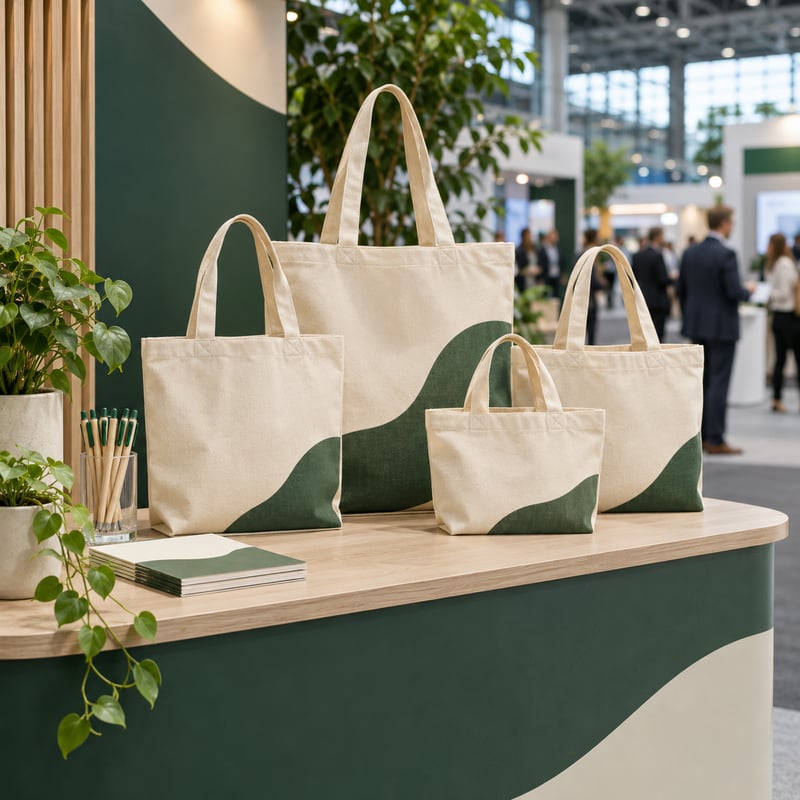
Key insight
Measure the largest brochure and thickest sample, then pack and carry a prototype with the full giveaway kit. Check the opening, gusset and handle drop, and place the logo where it remains legible on the filled bag. Schedule delivery to the venue or advance warehouse before its receiving deadline.
Branded shopping bags can make trade show giveaways feel organized, useful, and professional. The problem is that many teams choose a bag by guessing a “popular” size. That can lead to awkward carrying, poor logo visibility, or wasted budget. A better approach starts with contents, users, comfort, branding, and production timing.
A good trade show giveaway bag should fit the actual items inside, feel comfortable to carry, show the logo clearly in real use, and stay within budget and lead time. Branded shopping bags work best when size, material, handle style, logo placement, and packed contents are planned together instead of chosen separately.
Giftvera has joined many customization discussions where buyers ask for one universal bag size or the largest possible logo. Those questions are natural, but they rarely lead to the best answer. The more useful question is: what does the bag need to carry, and how will it represent the brand while being carried?
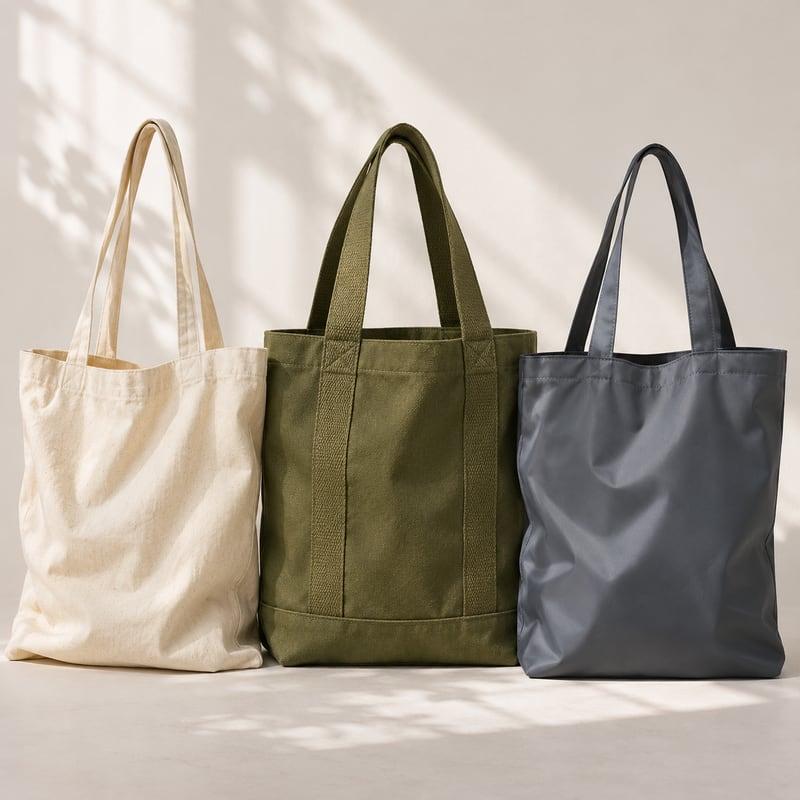
Explore Giftvera’s custom shopping bags for bag shapes, handle options and branding surfaces.
How should branded shopping bags be sized for trade show giveaways?
Choosing the wrong size creates a small but visible problem. If the bag is too small, brochures bend and samples crowd together. If the bag is too large, it feels empty, floppy, and wasteful. The solution is to size branded shopping bags around real contents and carrying conditions.
The right size for branded shopping bags depends on the largest flat item, total weight, and expected carrying time. Start by measuring brochures, catalogs, sample boxes, gifts, and inserts. Then allow enough space for easy packing without making the bag so large that it loses shape or looks underfilled.
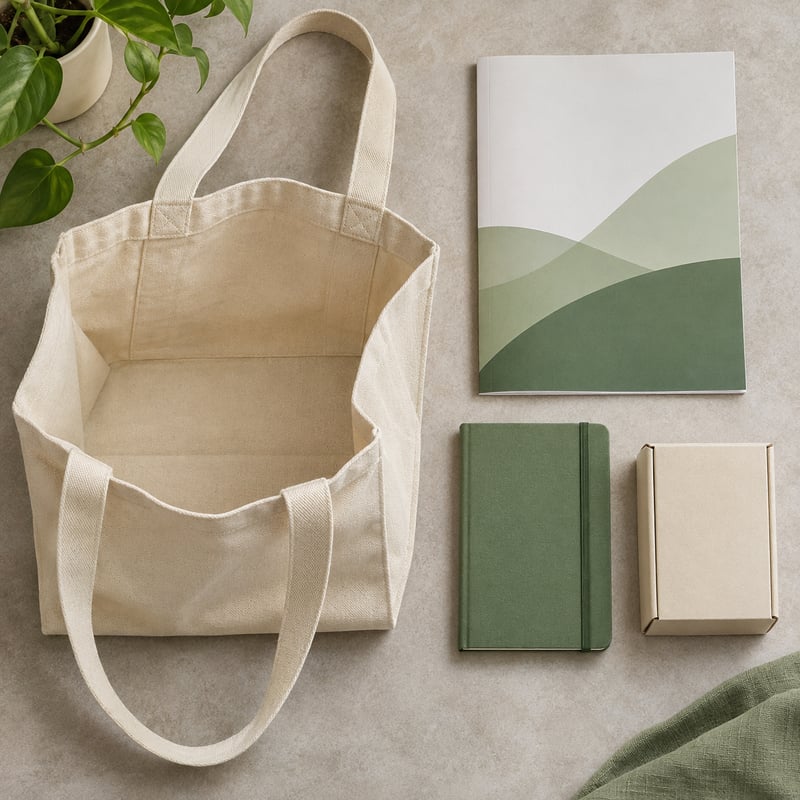
Start with the contents, not the “most popular” size
Giftvera often sees buyers begin with a question like, “What is the standard trade show bag size?” That is understandable, but it puts the decision in the wrong order. A trade show bag is not only a container. It is also a moving display, a convenience item, and sometimes the first physical brand touchpoint a visitor carries away.
A practical sizing process starts with three questions:
- What is the largest flat item?
This may be a brochure, product sheet, catalog, folder, or lookbook.
- What is the thickest item?
This may be a sample box, pouch, small bottle set, snack pack, or tech accessory.
- How much total weight will the person carry?
A light brochure set has different requirements from a bag containing samples and multiple promotional gifts.
Useful size logic for trade show bags
The table below is not a universal standard. It is a starting point for discussion.
| Giveaway contents | Practical bag direction | Watch out for |
|---|---|---|
| Flyers, postcards, thin brochures | Small to medium tote or shopping bag | Bag may feel too plain if underfilled |
| A4 or letter-size brochures, folder, pen | Medium vertical or horizontal bag | Width must prevent document bending |
| Catalog, sample pack, small gift | Medium bag with gusset | Handle strength becomes more important |
| Multiple gifts, apparel, boxed samples | Larger gusseted bag | Oversized bags can look empty if contents are light |
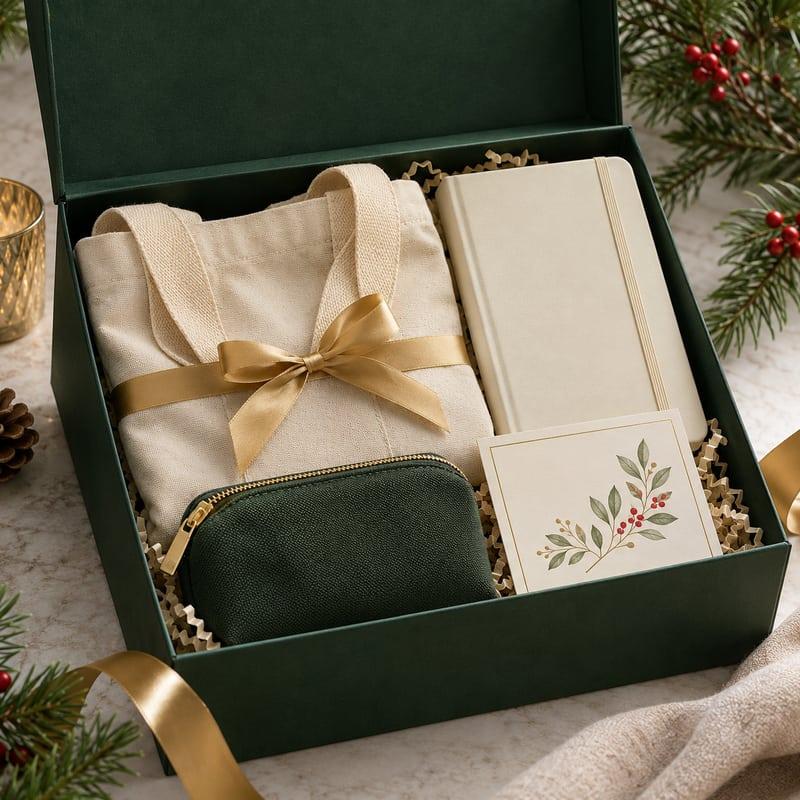
| Premium welcome or VIP kit | Structured bag or gift tote | Packaging, tissue paper, and insert layout matter |
Check the width, height, and gusset together
Many teams look only at width and height. The gusset matters just as much. The gusset is the side or bottom depth that allows the bag to expand. A bag with no meaningful gusset may fit flat papers but struggle with boxes, bottles, or pouches.
For example:
- A slim document bag may work for catalogs but not for product samples.
- A wide gusset bag may work for boxes but look bulky with only paper inside.
- A tall bag may show a logo well but make small items fall to the bottom.
- A horizontal bag may support brochures neatly but may need longer handles.
Consider the person carrying the bag
Trade show attendees may already carry laptop bags, water bottles, jackets, or other giveaways. A bag that looks good on a desk mockup may feel inconvenient after 30 minutes of walking. Giftvera does not claim on-site event operations expertise, but customization conversations often return to this simple point: comfort affects whether the bag gets carried visibly or quickly abandoned.
Consider these carrying factors:
- Handle drop: Can the bag be carried by hand only, or over the shoulder?
- Weight distribution: Will the contents sit flat or pull to one side?
- Bag stiffness: Will the bag stand neatly or collapse?
- Opening size: Can staff pack items quickly before the event?
- Reusability: Will the recipient use it again after the trade show?
For most branded shopping bags, the safest size is not the largest. It is the size that fits contents neatly, carries comfortably, and keeps the logo readable while the bag is in motion.
Where should the logo go on branded shopping bags?
Logo placement can become a problem when the flat mockup looks better than the carried bag. A huge logo may look strong on screen but distort on soft material or disappear under a folded edge. The solution is to judge placement by real viewing conditions.
The logo on branded shopping bags should usually sit on the main front panel, centered or slightly above center, with enough margin from seams, handles, folds, and gussets. The best placement keeps the brand readable while the bag is carried, filled, photographed, or placed on a booth table.
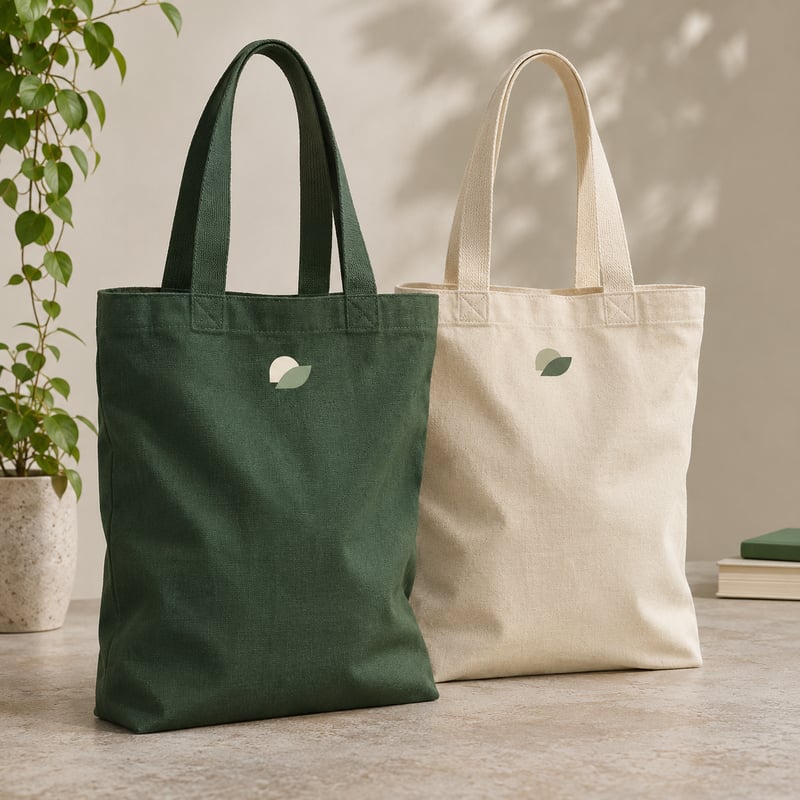
Bigger is not always more visible
Giftvera often hears requests for the largest possible logo. This instinct makes sense because trade show giveaways need brand visibility. Still, logo size is only one part of visibility. A very large logo may be less readable if it stretches across wrinkles, curves, seams, or textured fabric.
A better question is:
“What logo size stays clear when the bag is filled, held, and viewed from a normal distance?”
That question leads to better decisions about size, location, and print method.
Common logo placement options
| Logo placement | Best for | Possible concern |
|---|---|---|
| Center front panel | Most trade show giveaway bags | Needs clear space around the logo |
| Upper front panel | Taller bags or bags held low | May compete with handles |
| Lower front panel | Minimalist premium look | May be blocked when placed on a table |
| Both sides | Wider visibility | Higher print cost and production checks |
| Small logo plus pattern | Lifestyle or retail-inspired branding | Pattern alignment may add complexity |
| Tag, patch, or label | Premium or subtle branding | Less visible from distance |
Match logo process to the material
Logo placement cannot be separated from logo method. The same artwork behaves differently on non-woven fabric, cotton canvas, nylon, PU, kraft paper, or laminated material.
Common decoration methods include:
- Silk screen printing: Good for bold logos and larger runs.
- Heat transfer printing: Useful for more colors or gradient-style artwork.
- Embroidery: Premium on fabric, but small text may lose detail.
- Woven label: Good for a subtle retail-style finish.
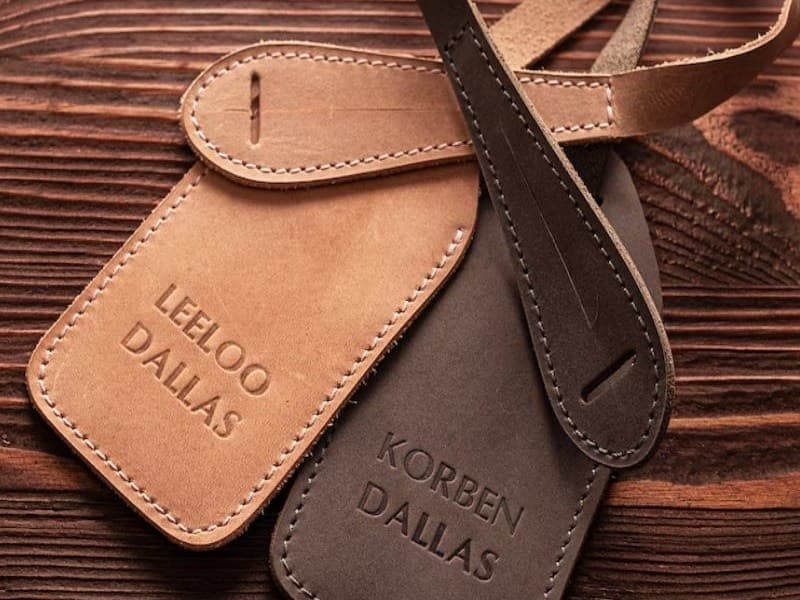
- Debossing or embossing: Suitable for PU or leather-like surfaces.
- Metal plate or rubber patch: Useful for premium gift bag concepts, but cost and lead time increase.
Keep readability in mind
Small text, thin lines, and complex marks can lose clarity. A trade show bag is often viewed while moving, not inspected up close. That means the artwork should work at a glance.
Giftvera usually recommends checking:
- Minimum line thickness
Thin lines may break in printing or look weak on textured fabric.
- Color contrast
A dark logo on a dark bag may look premium in a rendering but unreadable in real light.
- Safe margins
Logos should not sit too close to seams, edges, handles, or folds.
- Print area limits
Every material and bag construction has a practical print area.
- Artwork format
Vector files such as AI, EPS, or PDF usually support cleaner production checks.
Review material and decoration options in the Giftvera customization guide.
Use mockups carefully
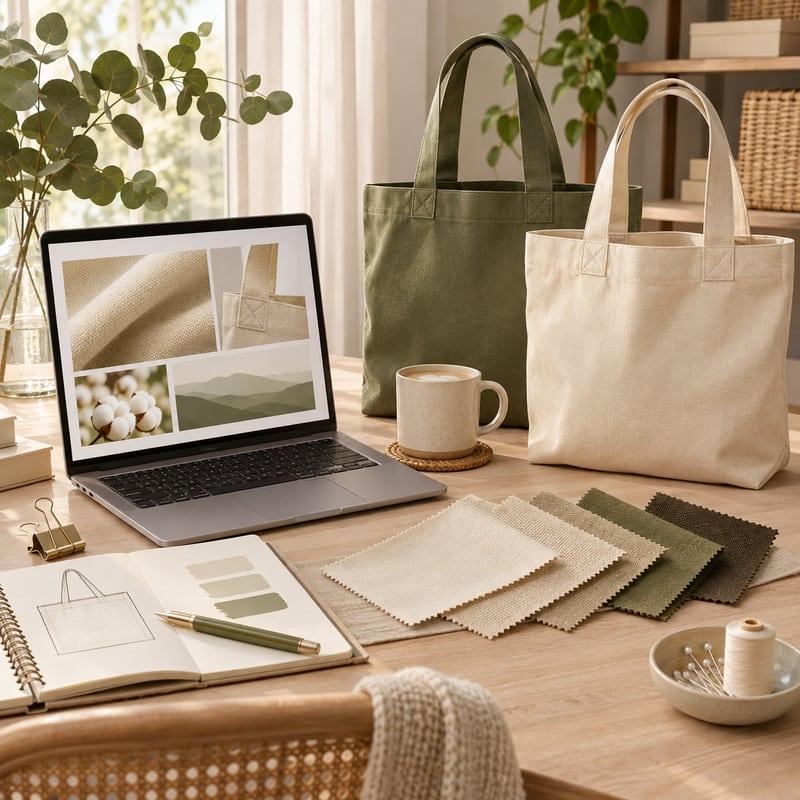
Digital mockups are helpful, but they can create false confidence. A flat mockup does not always show wrinkles, handle shadows, material texture, or the way contents change the shape of the bag. For important trade show projects, a pre-production sample or at least a printed logo test can reduce risk.
This is especially important for branded shopping bags that carry a premium brand campaign, launch kit, or media gift. A simple logo decision can affect the whole perceived quality of the giveaway.
What materials and handles work best for branded shopping bags?
Material choice becomes stressful when a bag needs to look good, carry weight, meet budget, and arrive on time. A cheap-feeling material can weaken the brand impression. An overbuilt material can waste budget. The solution is to match material and handle construction to use case.
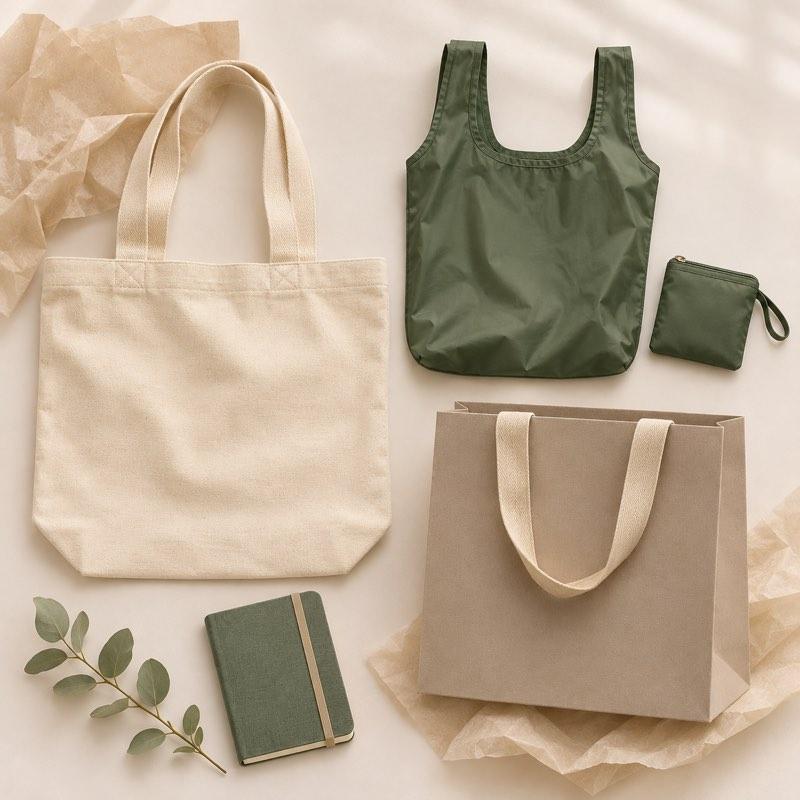
The best material for branded shopping bags depends on the giveaway weight, desired brand image, budget, and delivery schedule. Non-woven and laminated bags suit cost-sensitive campaigns, canvas and cotton feel reusable, nylon is lightweight, and PU or structured materials suit more premium gift sets.
Compare material options before choosing
Different materials send different signals. A beauty brand, software company, hotel group, and promotional products distributor may all use trade show bags, but their ideal materials may differ.
| Material | Typical impression | Strengths | Considerations |
|---|---|---|---|
| Non-woven fabric | Practical and economical | Lightweight, budget-friendly | Can feel basic if too thin |
| Laminated non-woven | Glossy, colorful, promotional | Supports bright printing | Less premium hand feel |
| Cotton canvas | Natural and reusable | Good for lifestyle branding | May cost more and shrink tolerance matters |
| Polyester or nylon | Light, smooth, travel-friendly | Good for foldable bags | Logo method must suit fabric |
| Kraft paper | Clean and retail-like | Good for light contents | Less durable for heavy or long carrying |
| PU material | Premium and structured | Good for executive gifts | Higher cost and MOQ may apply |
| RPET fabric | Sustainability-oriented positioning | Useful for eco-themed campaigns | Buyers should verify material claims and documents |
Giftvera can discuss PU, nylon, canvas, and other bag materials based on the project. When buyers require recycled content, compliance documents, or material certifications, those documents should be requested and verified during supplier evaluation.
Handle comfort matters more than many teams expect
Handles are often treated as a minor detail. They should not be. If the bag carries several samples, thin handles can cut into the hand. If the bag is too tall and the handle drop is too short, the person may not carry it comfortably.
Common handle options include:
- Die-cut handles: Simple and clean, often used on paper or plastic-style bags.
- Webbing handles: Stronger and more comfortable for fabric bags.
- Cotton tape handles: Soft and natural, good for canvas bags.
- Rope handles: Retail-like, often used on paper gift bags.
- PU handles: More premium, suitable for gift sets.
- Long shoulder handles: Useful when attendees may carry the bag for longer periods.
Match handle style to expected weight
A light brochure bag can use a simpler handle. A bag carrying boxed samples should have reinforced stitching or a stronger handle attachment. If the content is heavy, the buyer should ask the supplier about construction details, not only material name.
Useful questions include:
- How is the handle attached?
Is it stitched, heat-sealed, riveted, or inserted through the bag body?
- Is reinforcement possible?
Reinforced stress points can improve practical durability.
- Will the bag keep shape when filled?
Soft bags may need thicker fabric, lining, or a stronger gusset.
- Can the sample be packed with real contents?
This helps check comfort and visual balance before mass production.
If your giveaway includes a recycled-content claim, ask for documentation for the selected material and order. Textile Exchange explains recycled content verification and chain of custody. RCS and GRS overview.
Think about brand positioning
A trade show giveaway does not need to be expensive to be effective. It does need to feel aligned. A premium skincare brand may prefer a clean canvas tote or structured cosmetic-style bag. A tech brand may choose black nylon with a sharp printed logo. A hotel or travel brand may choose a travel pouch or reusable tote with a luggage tag inside.
Branded shopping bags work best when the material supports the message. If the event theme is sustainability, the buyer may explore cotton, canvas, RPET, or reusable construction. If the campaign is about luxury, PU trims, subtle branding, or gift-box pairing may matter more. If the project is price-sensitive, a clean non-woven design with good logo contrast may perform better than a more complex but poorly executed bag.
What should you pack inside trade show branded shopping bags?
A bag can fail even when the size and logo are correct. If the contents are too heavy, messy, or random, the giveaway feels like clutter. If the contents are useful and well arranged, the bag becomes a mobile brand touchpoint instead of simple packaging.
Trade show branded shopping bags should contain items that support the campaign goal, fit the bag neatly, and remain comfortable to carry. Common contents include brochures, product samples, small branded gifts, QR cards, notebooks, pens, pouches, vouchers, and product literature arranged by size and weight.
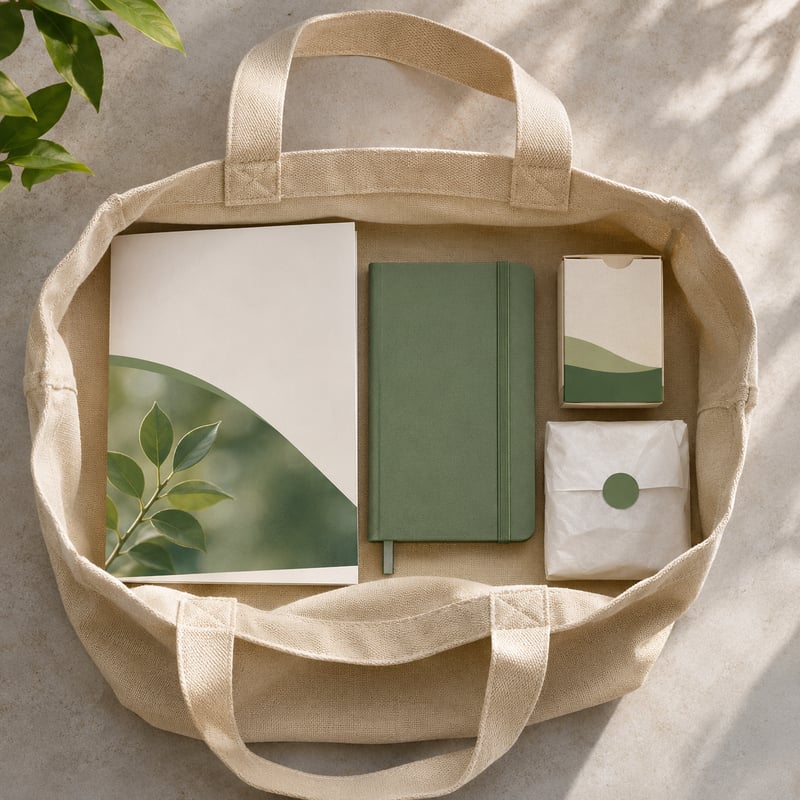
Pack around purpose
Before choosing contents, define the role of the bag. The same bag may support different goals.
| Campaign purpose | Suitable contents | Packing note |
|---|---|---|
| Product education | Brochure, spec sheet, sample card | Keep documents flat and easy to remove |
| Brand awareness | Small gift, flyer, QR card | Use a memorable but practical item |
| Sales follow-up | Catalog, contact card, offer card | Make next step clear |
| VIP meeting | Premium pouch, sample kit, note card | Use better packaging and layout |
| Retail launch | Product sample, coupon, mini lookbook | Make the bag feel like a retail gift |
Avoid overpacking
More items do not always create more value. A trade show attendee may receive many materials in one day. A heavy bag can become a burden. A crowded bag can also crush brochures or damage samples.
Giftvera has seen projects where the original packing list grows during planning. A brand may begin with one brochure and one gift, then add a catalog, sample box, pen, leaflet, and discount card. At that point, the original bag size may no longer work.
A simple packing review can prevent problems:
- Lay all items on a table.
- Measure the largest flat item.
- Stack the thickest items.
- Estimate the total weight.
- Check whether fragile items need protection.
- Decide which item should be seen first when the bag opens.
Use smaller gifts that match the bag
For trade show giveaways, practical branded items often work better than novelty items. The gift should feel useful and easy to carry.
Possible items include:
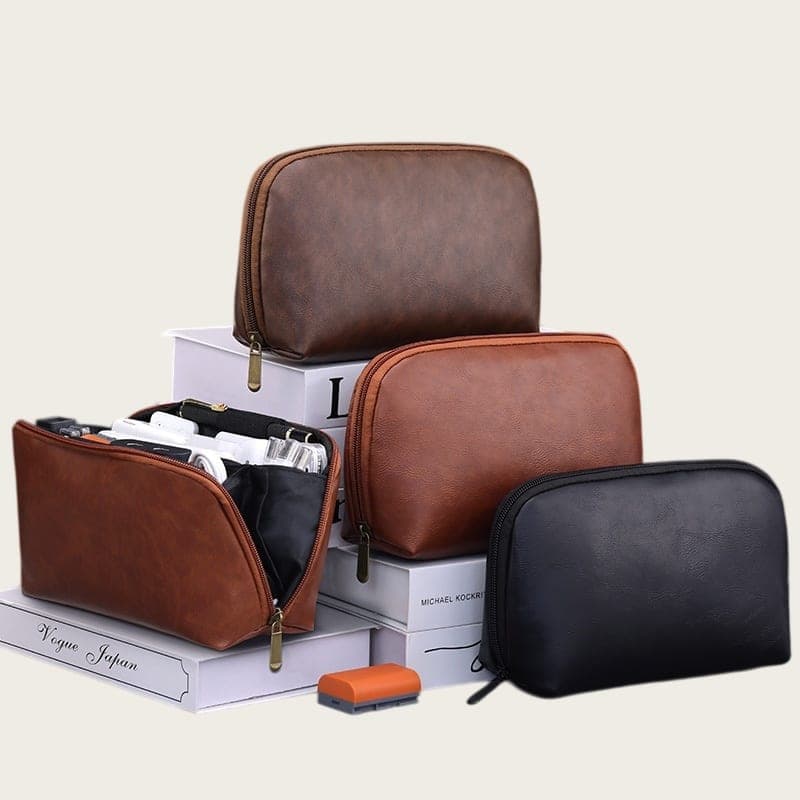
- Small cosmetic pouch
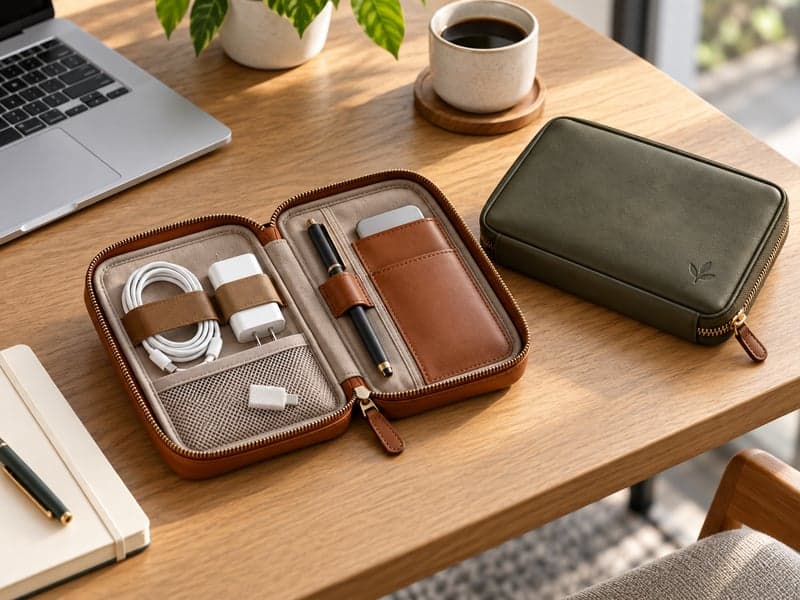
- Zipper organizer
- Travel cable pouch
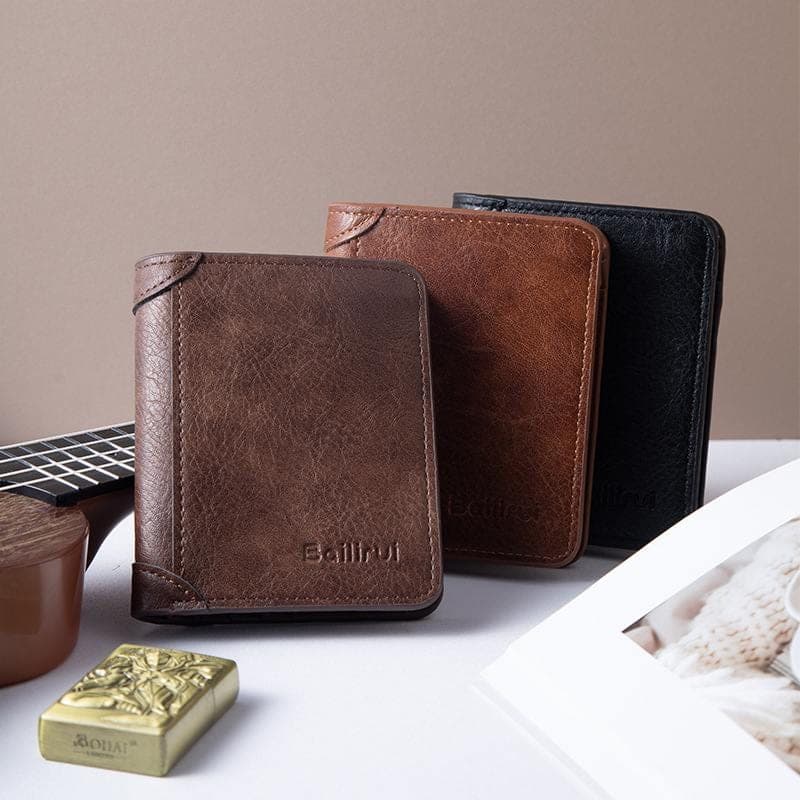
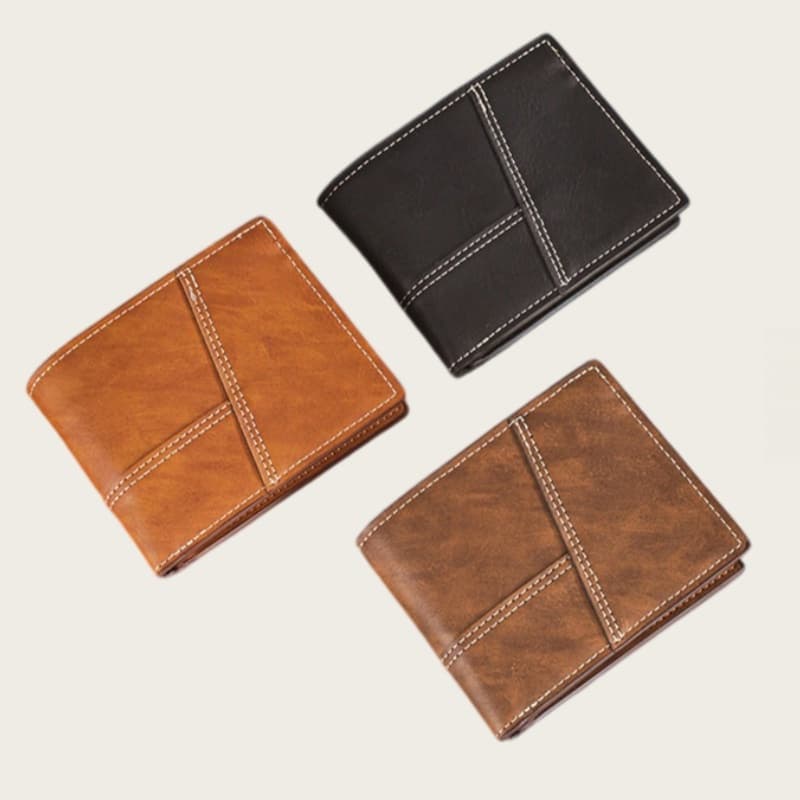
- Card holder
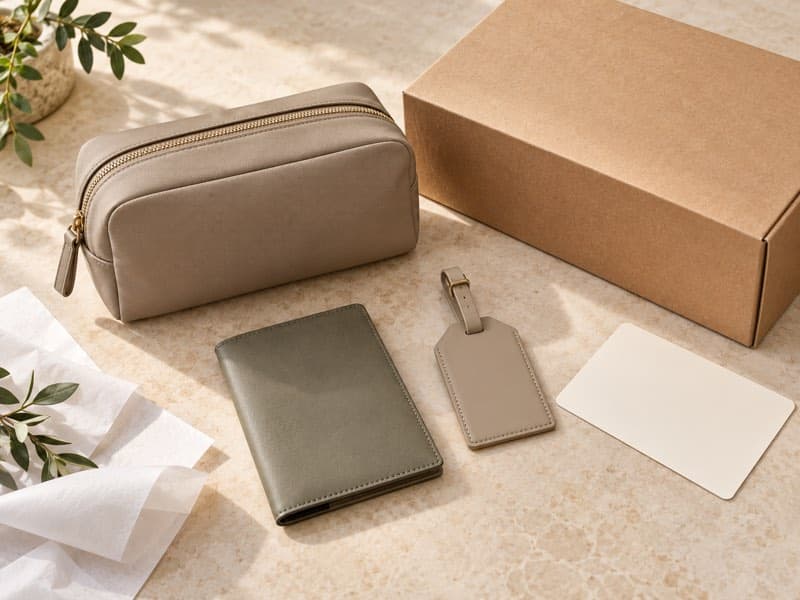
- Luggage tag
- Passport holder
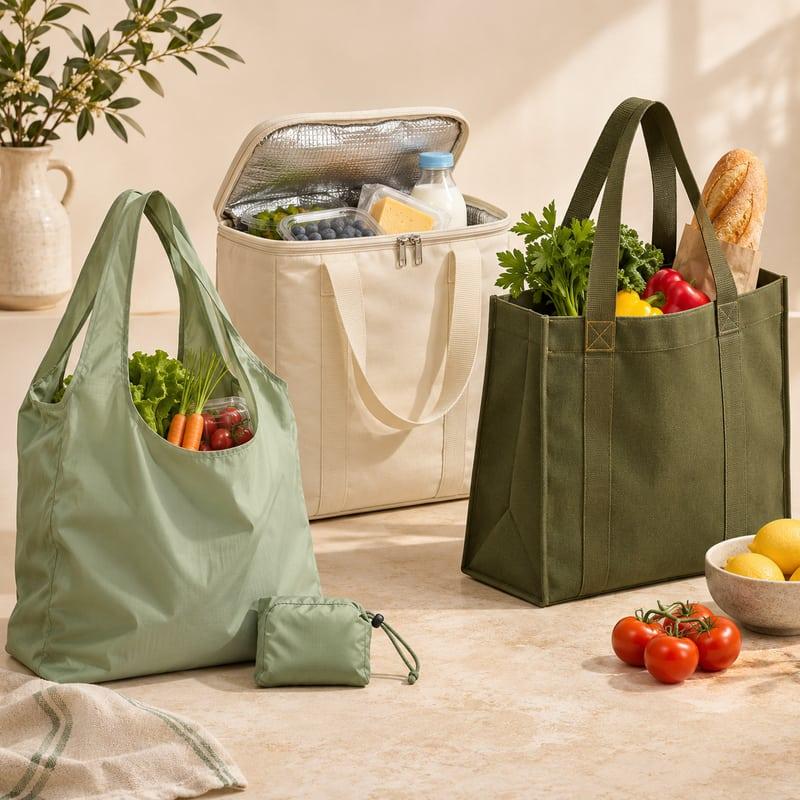
- Foldable tote
- Notebook and pen set
- Sample pouch
- Cleaning cloth or accessory kit
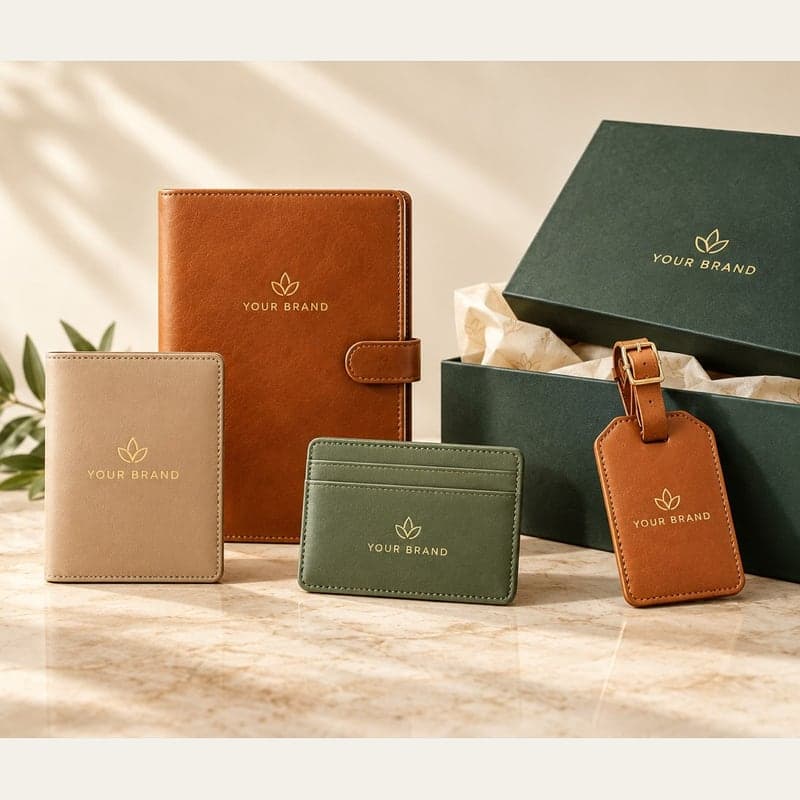
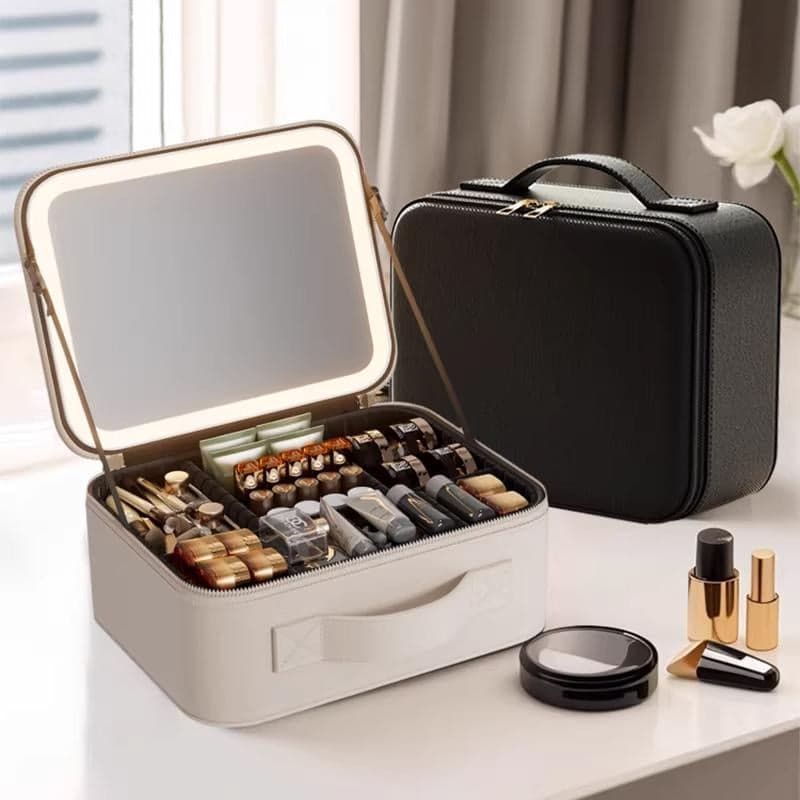
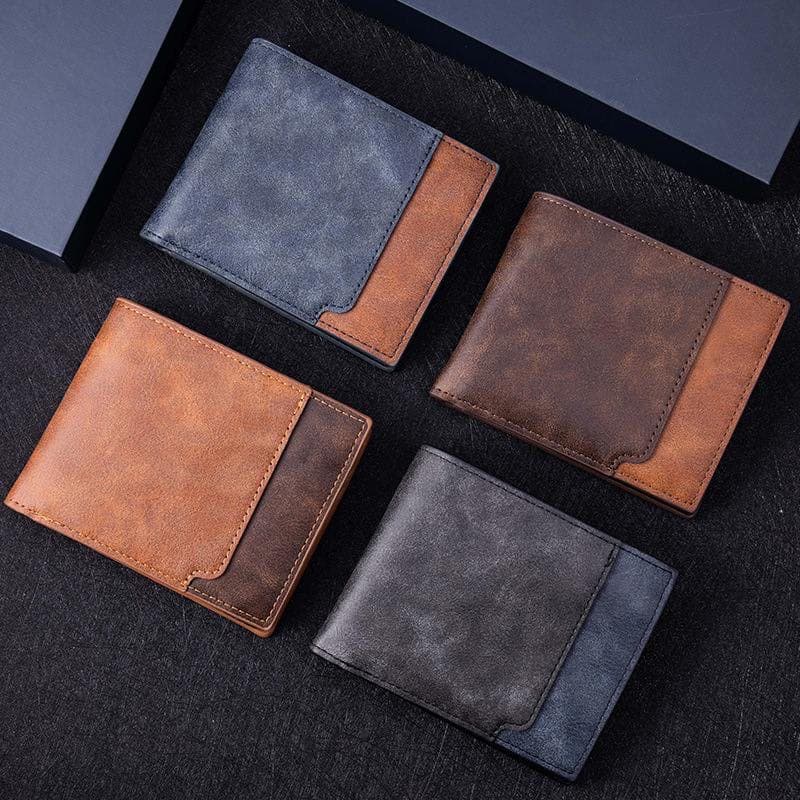
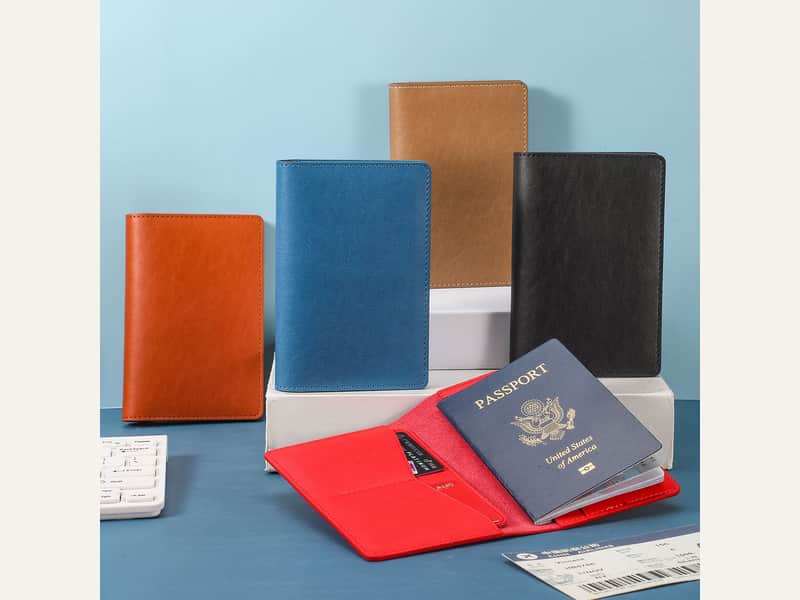
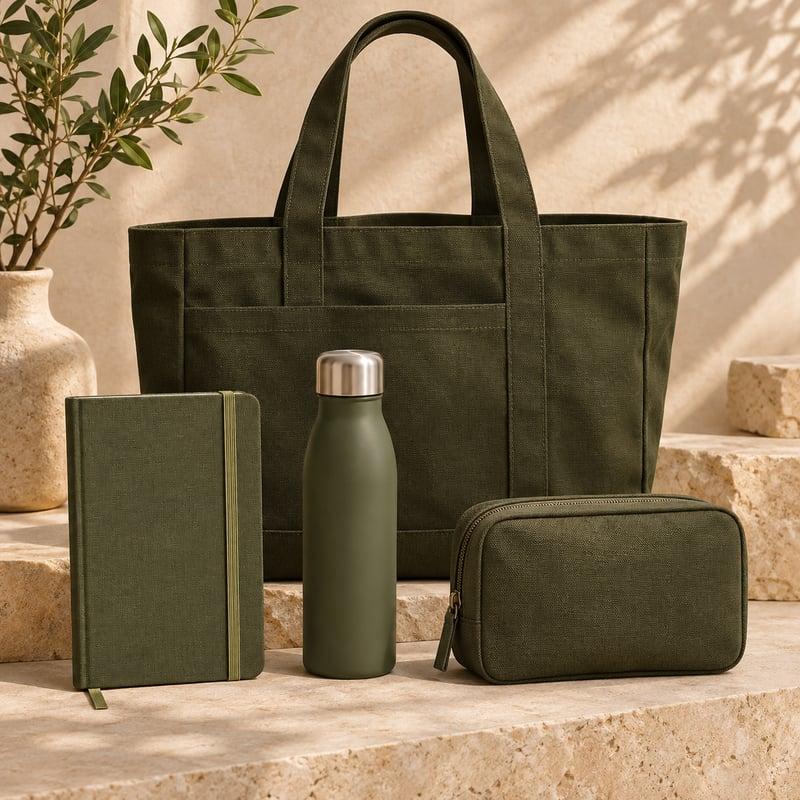
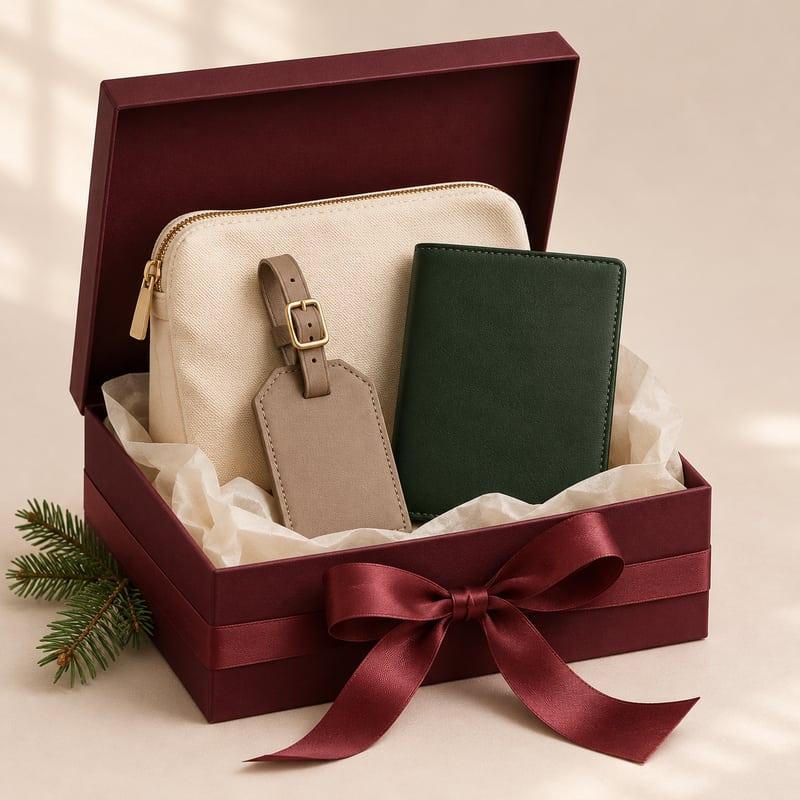
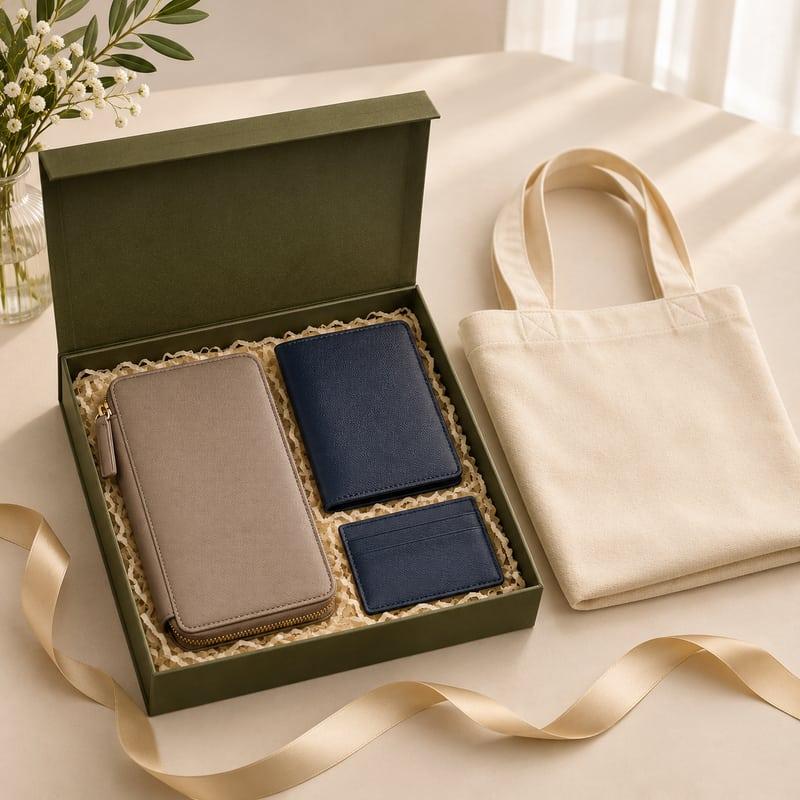
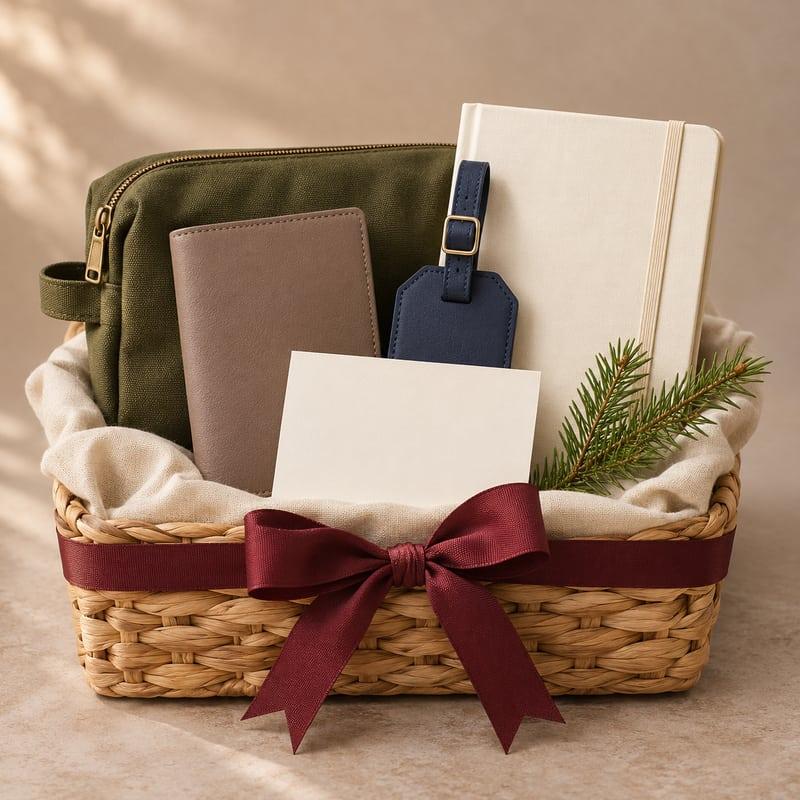
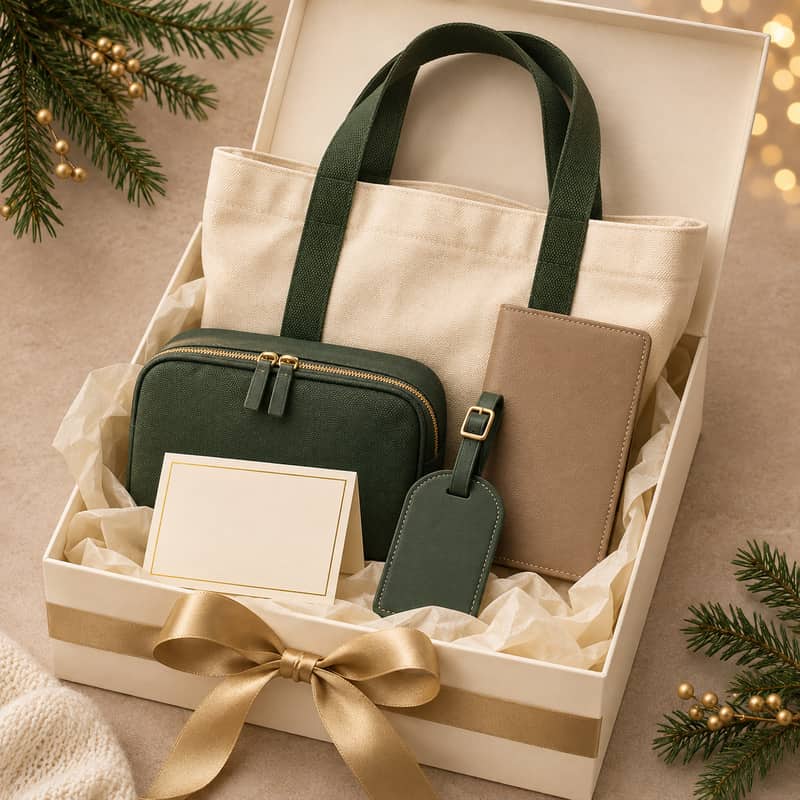
Because Giftvera works with bags, pouches, travel accessories, and small leather goods, these categories often pair naturally with branded shopping bags. For example, a beauty brand may place a custom cosmetic pouch inside a tote. A travel brand may pack a luggage tag and passport holder in a reusable bag. A marketing agency may build a simple kit with a pouch, brochure, and event card.
Arrange the bag like a gift, not a storage bin
Packing presentation changes the perceived value. Even a modest giveaway can feel more considered when it is arranged well.
Helpful details include:
- Place heavier items at the bottom.
- Keep paper materials flat.
- Use tissue paper for premium kits.
- Add a simple insert card to explain the offer.
- Put QR codes on cards rather than loose stickers.
- Avoid sharp corners that may damage the bag.
- Keep liquids, cosmetics, or fragile samples protected.
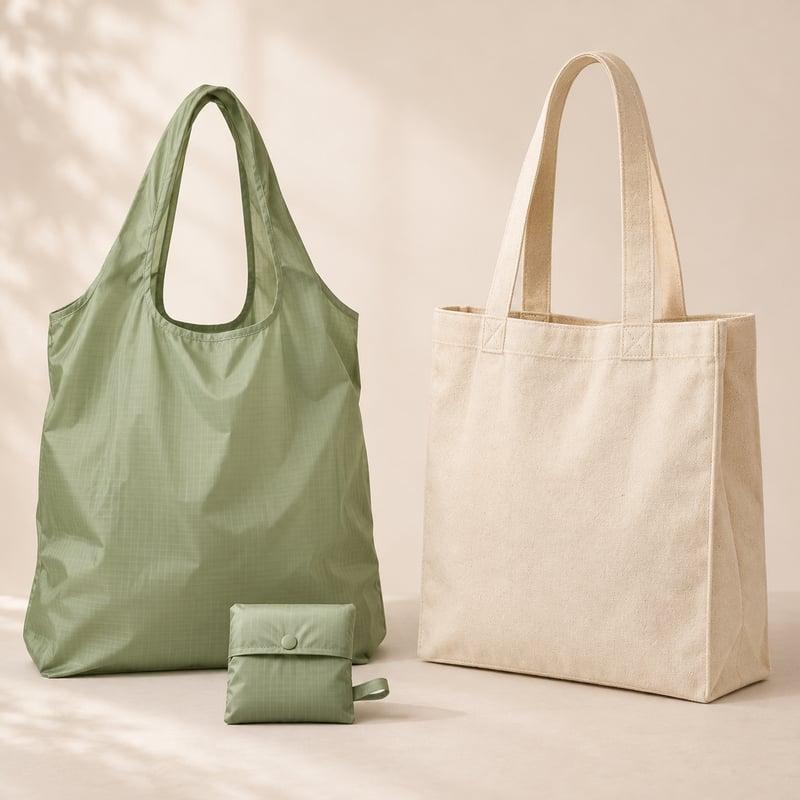
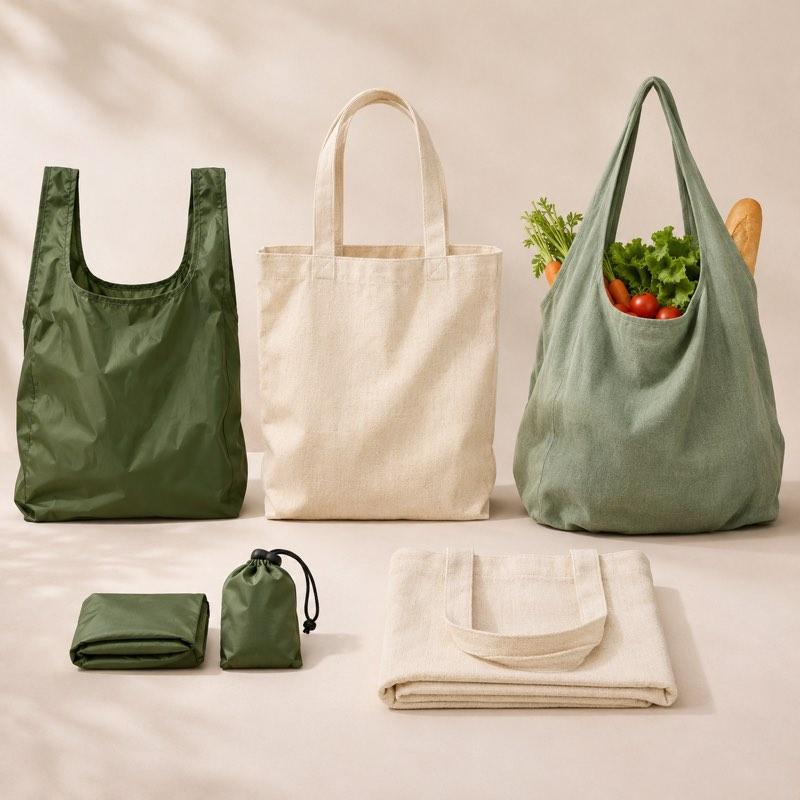
For a compact handout, compare pack-down formats in the foldable shoppers and everyday totes guide.
Make the next step clear
A giveaway bag should not only carry items. It should help the recipient understand what to do next. This does not require aggressive messaging. A simple card can work.
Examples include:
- “Scan to view the full catalog.”
- “Book a product demo.”
- “Redeem your event offer.”
- “Explore the new collection.”
- “Contact our team for wholesale pricing.”
The bag creates the first impression. The contents create the next action. When both work together, branded shopping bags become more than trade show packaging.
How do budget, MOQ, sampling, and lead time affect branded shopping bags?
Trade show projects often become difficult when design decisions happen before production realities are discussed. A complex logo, special material, low quantity, or short deadline can limit options. The solution is to discuss budget, MOQ, sampling, and delivery timing early.
Budget and lead time affect branded shopping bags by shaping material choice, logo method, sample approval, packing options, and shipping plan. Buyers should confirm quantity, artwork, target delivery date, destination, and content weight before finalizing design. Early planning reduces rushed compromises and production risk.
Start with the project facts
Giftvera usually asks for practical details before recommending a bag. These details help avoid mismatched suggestions.
Key information includes:
- Event date
- Delivery destination
- Required quantity
- Target unit budget
- Bag contents and approximate weight
- Logo artwork and number of colors
- Preferred material
- Packaging requirement
- Need for sample approval
- Any compliance or document requirements
Giftvera’s custom shopping bags typically start at 100–300 pieces per style, depending on material. Confirm the minimum for the selected style, colour, decoration and packaging. Samples usually take 5–14 days and production usually takes 25–40 days after sample approval, with shipping time additional.
Understand where cost comes from
The unit price of branded shopping bags is not determined by size alone. Several factors affect pricing.
| Cost factor | Why it matters |
|---|---|
| Material type and thickness | Heavier or premium materials cost more |
| Bag size and gusset | Larger bags use more material |
| Logo method | Embroidery, patches, or multi-color prints may add cost |
| Number of print positions | One-side printing costs less than two-side printing |
| Handle construction | Reinforced or premium handles increase labor and material |
| Lining or inner pocket | Adds complexity and production time |
| Packaging | Individual polybags, tissue, or gift boxes add cost |
| Quantity | Higher quantities usually improve unit economics |
| Shipping method | Air freight is faster but more expensive than sea freight |
Sampling is not just a formality
A sample helps confirm the material, color, logo effect, size, handle comfort, and packing fit. It is especially useful when the bag will carry multiple items or when the brand requires a polished appearance.
A good sample review should check:
- Size fit: Do all contents fit without bending or crowding?
- Logo clarity: Is the logo readable on the chosen material?
- Color accuracy: Does the bag color align with brand expectations?
- Handle comfort: Does the handle feel acceptable when loaded?
- Stitching and finish: Are seams, edges, and trims neat?
- Packing method: Can staff or fulfillment partners pack the items efficiently?
Giftvera recommends treating the sample as a decision tool. If the buyer changes the contents after sample approval, the size and handle decision may need to be reviewed again.
Lead time affects safe choices
Short timelines usually favor simpler customization. This does not mean the bag must look cheap. It means the project should avoid unnecessary complexity.
For tight schedules, safer choices may include:
- Existing bag shape with custom logo
- Standard material colors
- One-position logo printing
- Simple packaging
- Clear artwork files
- Fast sample confirmation
- Early shipping plan
For longer timelines, buyers can consider:
- Custom size development
- Special fabric color
- Custom lining
- Multiple logo positions
- Matching pouches or small leather goods
- Gift box assembly
- More detailed sample revisions
Plan delivery backward from the event date
Trade show deadlines are fixed. A late giveaway loses most of its value. Buyers should plan backward from the event date and include time for quotation, artwork confirmation, sampling, production, quality check, packing, shipping, and customs clearance where applicable.
A practical planning sequence looks like this:
- Confirm event date and delivery address.
- Define contents and target bag size.
- Choose material and logo method.
- Review quotation and MOQ.
- Approve artwork layout.
- Make and review sample.
- Confirm production order.
- Inspect and pack goods.
- Ship with enough buffer.
When time is limited, the most responsible choice is usually a simpler, production-ready design. A clean bag delivered on time is better than a complex concept that creates avoidable risk.
Frequently Asked Questions
What size should branded shopping bags be for trade shows?
The best size depends on the contents. Measure the largest brochure or folder first, then check the thickness and weight of samples or gifts. The bag should fit everything neatly without bending documents, overloading handles, or looking empty when carried.
Should the logo on a trade show bag be very large?
The logo should be readable, not simply large. A logo that is too big may distort on soft fabric, cross seams, or lose clarity when the bag is filled. Good logo placement considers material, print method, safe margins, contrast, and real carrying conditions.
What is a good material for reusable trade show bags?
Canvas, cotton, polyester, nylon, and laminated non-woven materials can all work, depending on budget and brand positioning. Canvas feels natural and reusable. Nylon is light and smooth. Non-woven options are cost-friendly. Buyers should match material to contents, comfort, and campaign image.
What should be packed inside branded shopping bags?
Common items include brochures, catalogs, QR cards, product samples, notebooks, pens, pouches, travel accessories, vouchers, and small branded gifts. The best contents support the campaign goal, stay comfortable to carry, and make the next action clear for the recipient.
How early should a company order trade show giveaway bags?
Buyers should start as early as possible, especially when sampling, custom colors, special materials, or gift set packing are required. Short timelines usually need simpler designs and faster approval. The event date, delivery location, quantity, and shipping method all affect the schedule.
How do you choose a trade show bag for A4 brochures?
Check the actual brochure or folder against the usable opening and internal dimensions of the finished sample. If it shares the bag with a boxed item, test both together and allow room for staff to pack and remove the brochure without bending it.
Which handles are best for a trade show bag filled with samples?
For a bag attendees will carry around the show, try a shoulder handle with enough drop for a jacket. Check handle width, attachment stitching and balance with the full kit. A short hand-carry handle can suit a lighter kit collected at the exit.
What should be approved on a pre-production sample?
Approve usable dimensions, handle comfort, artwork placement, fabric colour, stitching and the finished pack-out. Load the actual giveaway items and check logo visibility while carrying the bag. Record the final sample and any changes for the production team.
Conclusion
Branded shopping bags for trade show giveaways should balance content fit, carrying comfort, logo readability, material choice, budget, and lead time. The strongest option is rarely chosen by size alone. It is chosen by understanding what goes inside, who will carry it, and how the brand should appear in real use. If your team is planning a trade show bag, Giftvera can help review your contents, quantity, budget, logo method, and timeline before sampling and production.
Explore Giftvera’s premium gifting options when planning a coordinated exhibitor kit.